


Widow’s Peak Hairline Restoration (Natural V-Shaped Hairline Design)
Restore Balance and Definition to Your Hairline
A widow’s peak is a distinctive hairline pattern in which the centre of the hairline extends slightly downward, creating a natural V-shaped appearance. While some people naturally have a subtle widow’s peak, others may develop a more pronounced V-shaped hairline as a result of frontal hair loss, temple recession or changes in hair density.
For individuals who are unhappy with the appearance of their widow’s peak, hairline restoration can offer a personalised way to improve the shape, density and overall balance of the frontal hairline.
At HairNeva, widow’s peak hairline restoration is planned around the individual rather than following a standard hairline template. The design takes into account facial proportions, age, existing hair characteristics, donor hair availability and the patient’s aesthetic goals.
Depending on the individual assessment, DHI or FUE hair transplantation may be considered to restore density, soften a prominent widow’s peak or create a more harmonious transition between the central hairline and temples.
What Is a Widow’s Peak?
A widow’s peak is a natural hairline characteristic where the centre of the hairline forms a V-shaped point toward the forehead.
It can vary considerably in shape and prominence. Some people have a very subtle V-shaped hairline, while others may have a more defined or pronounced widow’s peak.
A widow’s peak can be:
- Naturally present from an early age
- More noticeable due to temple recession
- Accentuated by frontal hair thinning
- Asymmetrical or uneven
- Combined with a receding hairline
Having a widow’s peak is not a medical condition and does not necessarily require treatment. However, if the appearance of the hairline changes over time or a person would prefer a different hairline shape, hairline restoration may be an option for suitable candidates.
What Is Widow’s Peak Hairline Restoration?
Widow’s peak hairline restoration is a personalised hair transplantation procedure designed to improve the appearance of the frontal hairline.
The treatment does not necessarily aim to completely eliminate the V-shaped characteristic. In many cases, maintaining a subtle and natural central point while improving density around the hairline can create a more balanced appearance.
Depending on the patient’s needs, restoration may focus on:
- Softening a prominent widow’s peak
- Restoring thinning areas around the frontal hairline
- Improving density around the temples
- Reconstructing areas affected by hair loss
- Creating a smoother transition between the central hairline and temples
- Improving overall hairline definition
The objective is to create a hairline that looks natural both from a close distance and as part of the overall facial appearance.
Why Is Hairline Design Important?
The hairline plays an important role in facial proportions and overall appearance. Even a relatively small change in its position or shape can affect how the forehead and face are perceived.
A successful hairline restoration therefore involves much more than placing grafts into areas with reduced density.
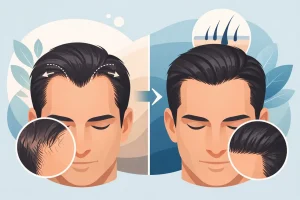
The hairline needs to be designed with consideration for:
Facial Proportions
The forehead, temples and overall facial structure are evaluated when determining the appropriate position and shape of the hairline.
Age and Long-Term Appearance
A hairline should look appropriate not only immediately after treatment but also as the patient gets older. An excessively low or artificially straight hairline may not provide a natural long-term appearance.
Existing Hair Pattern
The direction, thickness, density and growth characteristics of the existing hair are important when designing the new hairline.
Hair Loss Pattern
Frontal recession, temple thinning and the potential progression of future hair loss can influence the treatment plan.
Donor Hair Availability
The quality and density of the donor area help determine whether transplantation is appropriate and how much restoration can realistically be achieved.
How Is Widow’s Peak Hairline Restoration Performed?
The treatment begins with an individual hair and scalp assessment. The existing hairline, temples and donor area are evaluated to understand the patient’s current condition and treatment goals.
1. Hairline and Facial Assessment
The existing hairline is carefully examined, including the central widow’s peak, frontal hairline and temple areas.
Facial proportions are also considered to determine a suitable and natural-looking hairline position.
2. Personalised Hairline Design
The proposed hairline is designed according to the patient’s individual characteristics.
For a prominent widow’s peak, the objective may be to soften the central point rather than completely eliminate it. This can help maintain a natural appearance while improving overall balance.
3. Donor Area Evaluation
The donor area is assessed to determine the availability and quality of suitable follicular units.
The number of grafts required depends on the size of the treatment area, existing hair density, desired result and donor capacity.
4. Follicular Unit Extraction
When hair transplantation is recommended, suitable follicular units are carefully extracted from the donor area using the selected technique.
5. Hairline Reconstruction
The extracted grafts are strategically placed within the planned recipient area.
Particular attention is given to the angle, direction and distribution of the follicles. These details are especially important at the frontal hairline, where unnatural placement can make transplanted hair more noticeable.
DHI or FUE for Widow’s Peak Restoration?
The most appropriate hair transplant technique depends on the individual patient. There is no single technique that is suitable for every widow’s peak hairline restoration case.
At HairNeva, DHI and FUE hair transplantation may be considered depending on the patient’s hair characteristics, donor area, treatment goals and the area requiring restoration.
DHI Hair Transplant
Direct Hair Implantation (DHI) involves extracting individual follicular units and implanting them directly into the recipient area using an implantation device.
DHI may be considered when precise control over graft placement and density is important, particularly during detailed hairline restoration.
FUE Hair Transplant
Follicular Unit Extraction (FUE) involves individually extracting follicular units from the donor area before placing them into the recipient area.
FUE can be used for different types of hair restoration, including frontal hairline and temple restoration.
The final technique is determined following an individual assessment rather than being selected solely based on the procedure name.
Natural V-Shaped Hairline Design
A natural hairline is rarely perfectly straight or completely symmetrical.
Subtle variations in density, direction and contour are part of normal hair growth. Replicating these characteristics can be important when creating a natural-looking result.
For patients with a widow’s peak, the goal may be to preserve a subtle V-shaped characteristic while reducing excessive prominence or improving surrounding density.
Hairline design may take into consideration:
- The shape of the forehead
- Facial proportions
- Temple position
- Existing hair density
- Hair follicle direction
- Hair growth angle
- Graft distribution
- Existing hairline characteristics
- Potential future hair loss
The result should complement the patient’s facial features rather than appear as an artificially constructed hairline.
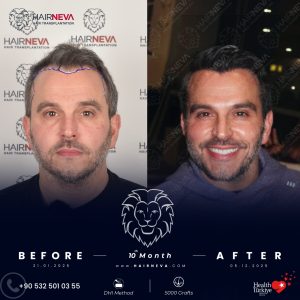
Who May Be a Candidate for Widow’s Peak Hairline Restoration?
Widow’s peak hairline restoration may be considered for adults who are concerned about the appearance of their frontal hairline and have sufficient donor hair for transplantation.
Potential candidates may include individuals who:
- Have a prominent widow’s peak
- Want to soften the appearance of a V-shaped hairline
- Have experienced frontal hairline recession
- Have thinning around the temples
- Want to improve frontal hair density
- Have an uneven or irregular hairline
- Want a more balanced hairline in relation to their facial features
- Have sufficient healthy donor hair for transplantation
Not every person with a widow’s peak requires hair transplantation. A detailed assessment is necessary to determine whether surgery is appropriate.
Widow’s Peak Hairline Restoration for Men
A pronounced widow’s peak is commonly associated with male hairline patterns, particularly when combined with temple recession or frontal thinning.
For men experiencing hairline recession, restoration may focus on rebuilding areas that have lost density while maintaining a natural transition between the central hairline and temples.
The treatment plan should also consider the possibility of future male pattern hair loss. Designing the hairline with long-term expectations in mind can help create a more sustainable aesthetic result.
Widow’s Peak Hairline Restoration for Women
Women can also have a naturally pronounced widow’s peak or experience changes in frontal hair density.
Because female hair loss can have different causes and patterns, identifying the underlying reason for frontal thinning is particularly important before considering hair transplantation.
For suitable candidates, restoration may be used to improve density or modify the appearance of the frontal hairline while maintaining a natural-looking result.
What Results Can You Expect?
The goal of widow’s peak hairline restoration is to create a natural-looking hairline that complements the patient’s facial features.
Hair transplantation does not produce an immediate final result. The transplanted follicles go through their natural growth cycle, and visible changes develop progressively.
Following the procedure:
- The transplanted hair may initially shed.
- New growth develops gradually.
- Hair density improves over time.
- The transplanted follicles mature progressively.
- The final appearance develops over several months.
The exact timeline and outcome vary between individuals and can depend on donor hair quality, graft characteristics, the number of grafts transplanted, individual healing and natural hair growth patterns.
Recovery After Hairline Restoration
Recovery following hairline restoration varies according to the individual and the technique used.
Temporary redness, mild swelling, sensitivity or small crusts may occur during the early postoperative period.
Patients receive detailed postoperative instructions to help protect the transplanted follicles and support the healing process.
It is important to follow the recommended aftercare instructions and avoid unnecessary pressure, rubbing or trauma to the treated area during the early recovery period.
Because hair growth occurs naturally over time, patience is an important part of the restoration process.
Widow’s Peak Hairline Restoration in Istanbul
Istanbul is an established destination for international patients seeking hair transplantation and hair restoration procedures.
At HairNeva, international patients can receive an individually planned treatment journey, from the initial hair assessment and hairline design through the procedure and postoperative follow-up.
The process is designed to provide patients with clear information about their treatment options and realistic expectations before travelling to Istanbul.
For international patients, treatment planning and postoperative support can also be coordinated around their travel schedule.
Why Choose HairNeva for Hairline Restoration?
Hairline restoration requires careful planning, precision and an understanding of how the hairline interacts with the overall appearance of the face.
At HairNeva, each patient is evaluated individually rather than being assigned a standard hairline design or graft number.
The treatment approach may include:
- Personalised hairline assessment
- Facial proportion analysis
- Detailed donor area evaluation
- Individual graft planning
- Natural-looking hairline design
- Consideration of future hair loss
- Postoperative guidance
- Dedicated support for international patients
The objective is to create a hairline that looks natural, balanced and appropriate for the individual patient.
Start Your Hairline Restoration Journey
Your hairline is unique to you. Rather than following a standard template, a personalised approach can help create a result that complements your facial structure and existing hair characteristics.
If you are considering Widow’s Peak Hairline Restoration, HairNeva can assess your hairline, donor area and individual goals to determine whether hair transplantation is appropriate for you.
Request a personalised hair assessment and discover your hair restoration options in Istanbul.