Can Shock Loss Affect Existing Hair After a Transplant?

Can shock loss affect existing hair? Learn why post-transplant shedding occurs, who faces greater risk, and how careful planning helps protect density.
- What Is Shock Loss After a Hair Transplant?
- Can Shock Loss Affect Existing Hair Permanently?
- Why Shock Loss Happens
- Who Is More Likely to Experience It?
In this article7
A successful hair transplant is designed to improve the appearance of thinning, not make it worse. Yet some patients notice increased shedding in the weeks after surgery and immediately worry that their existing hair has been permanently damaged. Can shock loss affect existing hair? Yes, it can. But in many cases, the shedding is temporary, manageable, and far less alarming when it has been anticipated through a physician-led treatment plan.
Shock loss is a real consideration after hair restoration, particularly for patients who still have a significant amount of native hair in thinning areas. Understanding why it happens, which patients are more susceptible, and how an experienced surgical team works to reduce the risk can help you make a more confident decision about treatment.
What Is Shock Loss After a Hair Transplant?
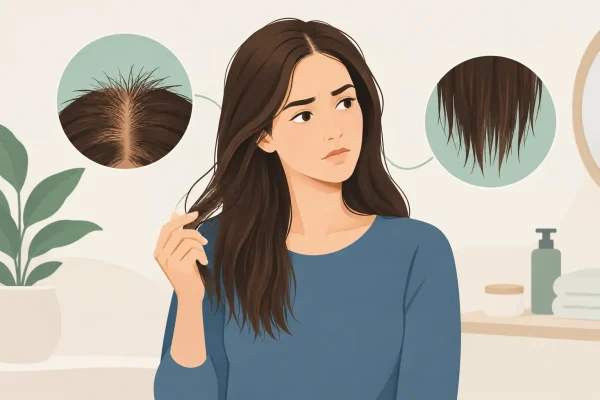
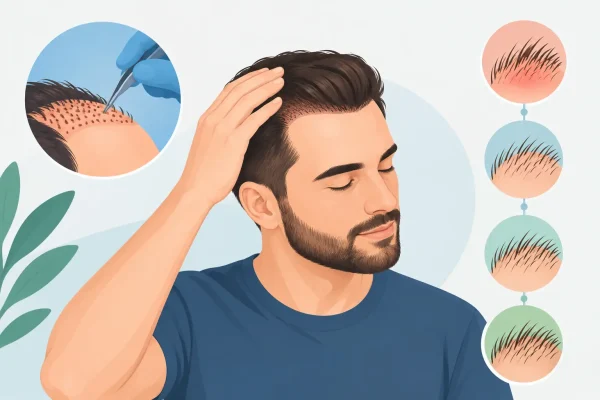
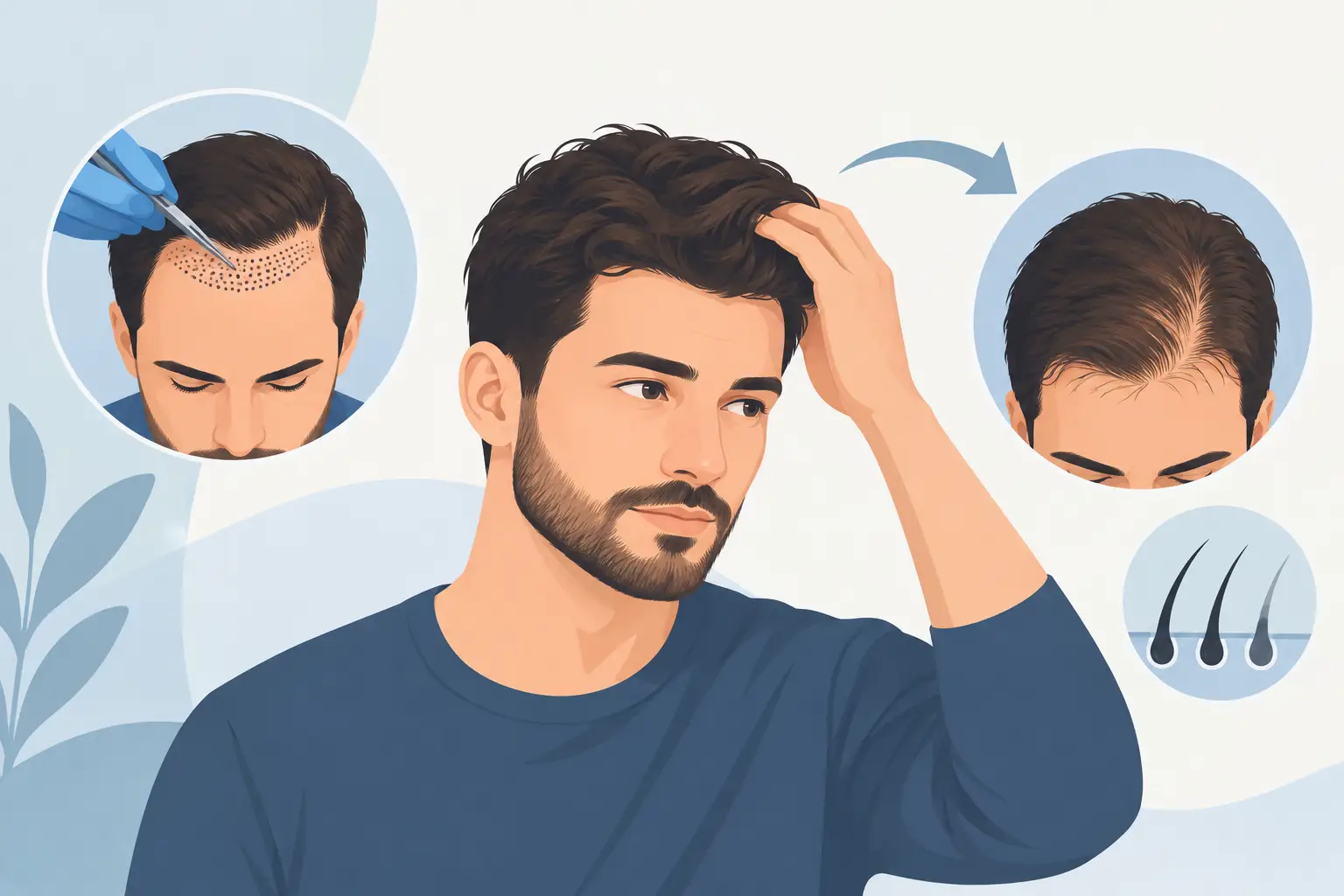
Shock loss, clinically described as postoperative telogen effluvium, is temporary shedding that may occur when existing hairs near the recipient area are stressed by the surgical process. It most often becomes visible two to eight weeks after a transplant. The hairs may fall out around newly placed grafts, in nearby thinning zones, or occasionally in the donor area.
This response does not mean the transplanted follicles have failed. In fact, transplanted hairs commonly shed after the procedure as part of their normal growth cycle, then begin growing again several months later. Shock loss refers specifically to the shedding of pre-existing, non-transplanted hairs that were already growing in the area before surgery.
The key question is whether those native hairs were healthy and stable or already affected by progressive miniaturization. Strong follicles can generally return to growth after the scalp recovers. Hair that was already very fine, weakened by androgenetic hair loss, or close to the end of its cycle may not fully recover. That distinction is why a personalized assessment matters far more than a one-size-fits-all graft plan.
Can Shock Loss Affect Existing Hair Permanently?
Shock loss can affect existing hair, but permanent loss is not the expected outcome for healthy follicles. When the scalp experiences temporary trauma, inflammation, or changes in blood supply during treatment, some hairs may shift prematurely into a resting phase and shed. Once the area heals, those follicles often re-enter the growth phase.
However, a transplant does not stop the natural progression of genetic hair loss. If native hair is already miniaturizing, shedding after surgery can reveal the underlying condition more clearly. A patient may interpret this as surgical damage when, in reality, the hair was already vulnerable and likely to decline over time.
This is especially relevant in patients with diffuse thinning, early hair loss, or an unstable pattern of recession. Placing grafts between fragile native hairs requires technical precision. It also requires an honest long-term strategy: how will the result continue to look if non-transplanted hair becomes thinner in the years ahead?
A skilled surgeon plans for the hair you have now and the hair you may lose later. That may involve conservative hairline design, measured graft placement, medical hair-loss management when appropriate, and a discussion about whether surgery should happen now or after a period of stabilization.
Why Shock Loss Happens
Hair follicles are sensitive biological structures. Even minimally invasive techniques such as FUE, Sapphire FUE, and DHI involve carefully creating recipient channels or implanting grafts into the scalp. Temporary swelling, local inflammation, and the physical stress of surgery can affect adjacent native hairs.
The likelihood and severity of shedding depend on several factors. Patients with dense but thinning native hair can be at greater risk because grafts must be placed among existing follicles. Diffuse thinning may create a similar challenge, as the surgeon must improve coverage without overworking the scalp or compromising the visual balance of existing hair.
Large sessions, aggressive density targets, and poor recipient-site technique can increase unnecessary trauma. This does not mean a larger procedure is inherently unsafe. It means the procedure should be designed around scalp condition, donor capacity, hair caliber, curl pattern, and the realistic density required for a natural appearance.
Existing hair can also shed in the donor area after extraction. Known as donor shock loss, this is usually temporary when extraction is appropriately distributed and the donor zone has been accurately evaluated. Overharvesting, by contrast, can create lasting visual thinning. This is one reason physician oversight and proper donor management are central to a high-quality result.
Who Is More Likely to Experience It?
Shock loss is unpredictable, but certain profiles deserve particularly careful planning. Patients with early-stage male pattern hair loss often retain many miniaturized hairs in the frontal zone and mid-scalp. Women with diffuse thinning may have widespread reduced density without a clearly defined bald area. Both groups can benefit from a detailed analysis of hair caliber and follicular density before surgery.
You may also be more susceptible if you have had recent rapid shedding from stress, illness, hormonal changes, nutritional deficiencies, or a scalp condition. In these situations, it may be wiser to identify and address the cause of active shedding before scheduling a transplant.
Patients seeking an extremely low hairline or maximum density in one session should also understand the trade-off. A more aggressive design can use more grafts, increase work within areas containing native hair, and leave less donor reserve for future needs. A natural result is not simply about placing the highest possible number of grafts. It is about achieving aesthetic impact while protecting long-term options.
Why Hair Analysis Changes the Plan
A visual consultation alone cannot always show how much native hair is miniaturized. Advanced digital assessment, including AI-supported hair analysis, can help map density, hair shaft variation, and the pattern of thinning. This information supports safer graft distribution and a more accurate discussion of shock loss risk.
For international patients, this analysis is also valuable because it makes planning more transparent before travel. High-resolution photos and a medical review can establish an initial direction, while an in-person scalp examination confirms the final plan. No responsible clinic should promise a fixed graft number or an identical result before evaluating the individual scalp, donor area, and long-term hair-loss pattern.
How an Experienced Team Helps Reduce Shock Loss Risk
No ethical surgeon can guarantee that shock loss will never happen. The goal is to reduce avoidable risk and protect the hair that remains. That begins with determining whether you are a suitable surgical candidate at this stage of your hair-loss journey.
At HairNeva, treatment planning is centered on physician-led evaluation, natural aesthetic design, and techniques selected for the patient’s individual needs. For some patients, an unshaven transplant can support a discreet recovery while preserving the surrounding hairstyle. For others, DHI or Sapphire FUE may be chosen based on the recipient area, desired density, and hair characteristics. The technique matters, but the surgeon’s judgment and execution matter more.
A thoughtful plan often includes the following considerations:
- protecting the blood supply of the recipient area by avoiding unnecessarily dense or traumatic channel creation;
- placing grafts at angles and directions that blend with existing hair rather than competing with it;
- distributing extraction carefully across the donor zone to preserve a natural donor appearance;
- discussing supportive medical or regenerative options when native hair needs stabilization; and
- creating a future-conscious design that preserves graft reserve for progressive hair loss.
Regenerative treatments such as mesotherapy, laser-supported hair care, platelet-rich plasma where clinically indicated, or other physician-recommended protocols may be discussed as supportive options. They are not substitutes for a well-planned transplant, and they should never be presented as guaranteed ways to prevent shock loss. Their role depends on the patient’s diagnosis, scalp health, and treatment goals.
What to Expect If Shedding Occurs
Seeing more hairs in the shower or on your pillow after a transplant can be unsettling, especially when you have invested time, travel, and trust in the procedure. Contact your clinic rather than making assumptions based on photos online. The timing, location, degree of shedding, scalp appearance, and your preoperative hair condition all help determine whether the response is expected.
Temporary shock loss generally improves as the scalp settles and follicles return to their growth cycle. Hair growth is slow, so patience is part of the process. Early recovery can look uneven before it looks better. Transplanted grafts commonly begin visible new growth around three to four months, with more meaningful change developing over subsequent months.
Follow aftercare instructions closely. Avoid scratching, friction, unapproved topical products, strenuous activity during the restricted period, and any action that could irritate healing grafts. Attend follow-up assessments, especially if shedding is extensive, persistent, painful, or accompanied by redness, drainage, or unusual scalp symptoms.
The most reassuring path is not a promise that every existing hair will remain untouched. It is a carefully tailored procedure that respects your current density, protects your donor supply, and gives your hair restoration plan the best chance to look natural now and remain credible as your hair changes over time.