Why Does Hair Growth Look Uneven During Recovery?

Why does hair growth look uneven during recovery? Learn what is normal after a transplant, what affects density, and when to speak with your surgeon.
- Why Does Hair Growth Look Uneven During Recovery?
- The Growth Cycle Is Naturally Asynchronous
- Healing Changes the Way Density Looks
- Uneven Growth Can Differ by Technique and Area
In this article7
A new hairline can look surprisingly patchy before it looks natural. One area may begin growing while the section beside it seems quiet, or the crown may appear thinner than the frontal zone for months. If you are asking, “why does hair growth look uneven during recovery?” after a hair transplant, the short answer is that follicles do not wake up on the same schedule.
This stage can test your patience, particularly when you have invested in a carefully designed, natural-looking result. Uneven early growth is usually part of normal healing, not a sign that the procedure has failed. Still, the timeline, pattern, and health of the scalp matter. Understanding what is expected helps you protect the result and recognize when your surgeon should take a closer look.
Why Does Hair Growth Look Uneven During Recovery?
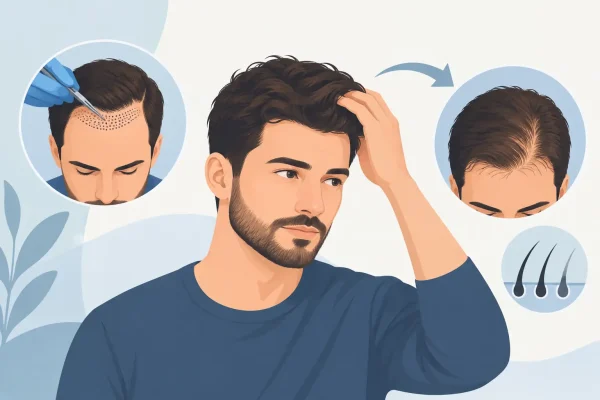
Hair transplantation moves individual follicular units from a donor area, usually the back and sides of the scalp, into thinning or bald areas. Each graft contains living follicles, but those follicles respond to surgery, healing, blood supply, and their own growth cycles individually. They are not switches that turn on at the same time.
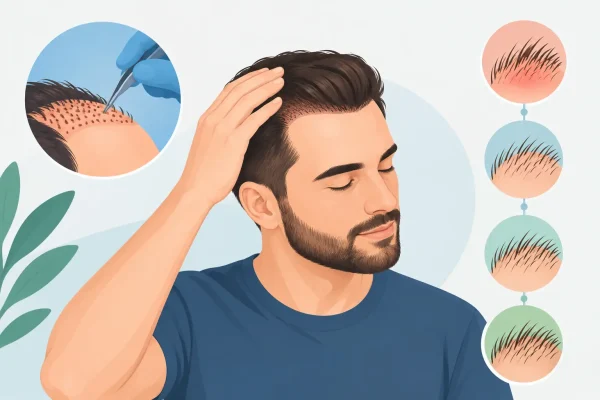
After placement, the transplanted hair shafts commonly shed within two to eight weeks. This is often called shock shedding. The follicle remains beneath the skin, but the visible hair shaft drops out as the follicle enters a resting phase. Seeing shedding can be unsettling, yet it is a normal part of recovery for many patients.
New growth typically begins around months three to four, although some patients notice it sooner and others later. At first, the new hairs may be fine, short, lighter in color, or slightly irregular in direction. A group of grafts may emerge in one part of the hairline before neighboring grafts do, creating an uneven appearance. This does not reliably predict the final density.
The Growth Cycle Is Naturally Asynchronous
Natural hair is never perfectly synchronized. Every follicle moves independently through growing, resting, and shedding phases. A transplant temporarily disrupts this rhythm. Surgical handling, swelling, local healing, and the transition into a new blood supply can make the timing differences more visible.
The frontal hairline often appears to develop first because patients watch it closely and because even a small number of new hairs can create a visible frame for the face. Crown restoration may seem slower, partly because its larger surface area requires more coverage before it looks full. The swirl pattern in the crown also exposes the scalp differently under overhead light.
Hair texture can add to the impression. Curly or coarse hair may create coverage earlier than fine, straight hair. Patients with lighter hair color or a strong contrast between their hair and scalp may continue to see more scalp until the shafts mature and thicken.
Healing Changes the Way Density Looks
Early density is not just about how many hairs have grown. Redness, residual swelling, dry skin, crusting, or temporary scalp sensitivity can change the way light reflects from the treatment area. A short haircut can make spacing between emerging hairs more obvious. So can bright bathroom lighting, wet hair, camera flash, or repeatedly checking the scalp from very close range.
Native hair can also react to surgery. Existing hairs around the transplanted zone may temporarily shed due to surgical stress, a phenomenon known as shock loss. This is more likely when the surrounding hair was already miniaturized by androgenetic hair loss. If that hair returns gradually while transplanted growth is only beginning, the area can look inconsistent for a period.
This is one reason a surgeon-led plan should consider both graft placement and preservation of existing hair. For some patients, medical therapy or regenerative support may be recommended to stabilize vulnerable native follicles. The right approach depends on your pattern of loss, medical history, donor capacity, and long-term goals.
Uneven Growth Can Differ by Technique and Area
FUE, Sapphire FUE, and DHI techniques are designed to place grafts precisely and with minimal trauma, but no technique can make every follicle grow on an identical date. The quality of graft handling, appropriate recipient-site design, and accurate angle and direction all influence the final result. They do not eliminate the normal maturation process.
An unshaven procedure can make recovery more discreet, but it can also make early unevenness harder to judge because longer surrounding hair may conceal some areas and expose others. Female patients often have diffuse thinning rather than a sharply defined bald zone, so perceived density can shift depending on styling and the condition of existing hair. Beard and eyebrow transplants have their own timelines as well, with early irregular growth often settling as hairs mature and are trimmed into the intended shape.
A well-designed transplant also avoids an unnaturally uniform appearance. Natural hairlines have subtle variation in density and single-hair grafts at the leading edge. During recovery, that purposeful softness may look more noticeable before the hairs behind it grow in and create depth.
What the Typical Timeline Looks Like
The first two weeks are focused on graft protection and scalp healing. By weeks two through eight, transplanted shafts may shed. From months three to five, scattered new hairs commonly begin to emerge. This is the phase when unevenness is often most obvious.
Between months six and nine, coverage usually improves substantially. New shafts become longer and many begin to gain caliber. By months 10 to 12, the result is much easier to assess, although crown areas and patients with slower-growing hair may continue maturing for 12 to 18 months.
These ranges are guides, not promises. Age, smoking, nutritional status, scalp health, medications, circulation, genetic hair characteristics, and the extent of prior hair loss can all affect recovery. A responsible clinic evaluates progress against your own treatment plan rather than comparing your month-four photo with someone else’s month-eight result.
How to Support More Consistent Recovery
You cannot force follicles to grow in lockstep, but you can avoid interfering with their recovery. Follow the washing instructions provided by your surgical team, avoid scratching or picking the recipient area, and protect the scalp from direct sun during the period your surgeon recommends. Do not resume intense exercise, swimming, helmets, or tight headwear before you have been cleared to do so.
Smoking and nicotine can impair circulation, while heavy alcohol use, poor sleep, and restrictive dieting can work against healthy healing. Eat a balanced diet with adequate protein, stay hydrated, and take only the supplements or medications your physician approves. Starting topical products, growth medications, or scalp treatments too early can irritate healing skin, so timing matters.
Progress photos are more useful than daily mirror checks. Take them monthly in the same room, with the same lighting, angle, and hair length when possible. This gives you and your medical team a more honest view of change. HairMetrix-supported analysis may also help document density and hair caliber over time when it is appropriate for your care plan.
When Uneven Hair Growth Needs a Clinical Review
Patchiness alone during the first several months is rarely an emergency. However, contact your surgical team promptly if you develop worsening redness, significant pain, warmth, pus-like drainage, persistent bleeding, fever, or expanding areas of crusting. These symptoms can indicate infection or another healing concern that should not be managed at home.
It is also reasonable to request a review if there is no visible growth by month six, if a distinct area remains completely bare while the rest is progressing, or if you notice sudden ongoing loss in untreated hair. Your surgeon may examine the scalp, review your aftercare, assess whether native hair loss is continuing, and discuss whether further treatment or simply more time is appropriate.
At HairNeva, recovery is viewed as part of the treatment, not an afterthought. A personalized surgical design, physician oversight, and structured follow-up give patients a clearer way to track the transition from early, uneven growth to a more refined and natural result.
The most reassuring milestone is not the first scattered hair you see in the mirror. It is the gradual moment when those individual hairs begin working together, adding coverage, framing the face, and making the result feel like your own.