When Does Scalp Sensitivity Return After Hair Transplantation?

When does scalp sensitivity return after hair transplantation? Learn the healing timeline, what affects nerve recovery, and when to contact your surgeon.
- Why the scalp can feel numb after a hair transplant
- When does scalp sensitivity return after hair transplantation?
- What affects your sensation recovery timeline?
- How to support comfortable scalp healing
In this article10
- Why the scalp can feel numb after a hair transplant
- When does scalp sensitivity return after hair transplantation?
- The first week: numbness, swelling, and tenderness
- Weeks two to six: tingling can signal recovery
- One to three months: clear improvement for many patients
- Three to six months: lingering numbness usually resolves
- What affects your sensation recovery timeline?
- How to support comfortable scalp healing
- When numbness needs medical advice
- Sensation returns before the final cosmetic result
A numb or unusually sensitive scalp can feel alarming after a hair transplant, particularly when you are traveling home soon after treatment. So, when does scalp sensitivity return after hair transplantation? For most patients, sensation improves gradually over several weeks to months as small sensory nerve endings recover. Temporary numbness, tingling, tightness, or brief electric-like sensations are usually part of normal healing, not a sign that the transplanted follicles are failing.
The precise timeline depends on the technique used, the size of the treatment area, your individual healing response, and how closely aftercare guidance is followed. A surgeon-led assessment is the best way to distinguish an expected recovery sensation from a concern that needs attention.
Why the scalp can feel numb after a hair transplant
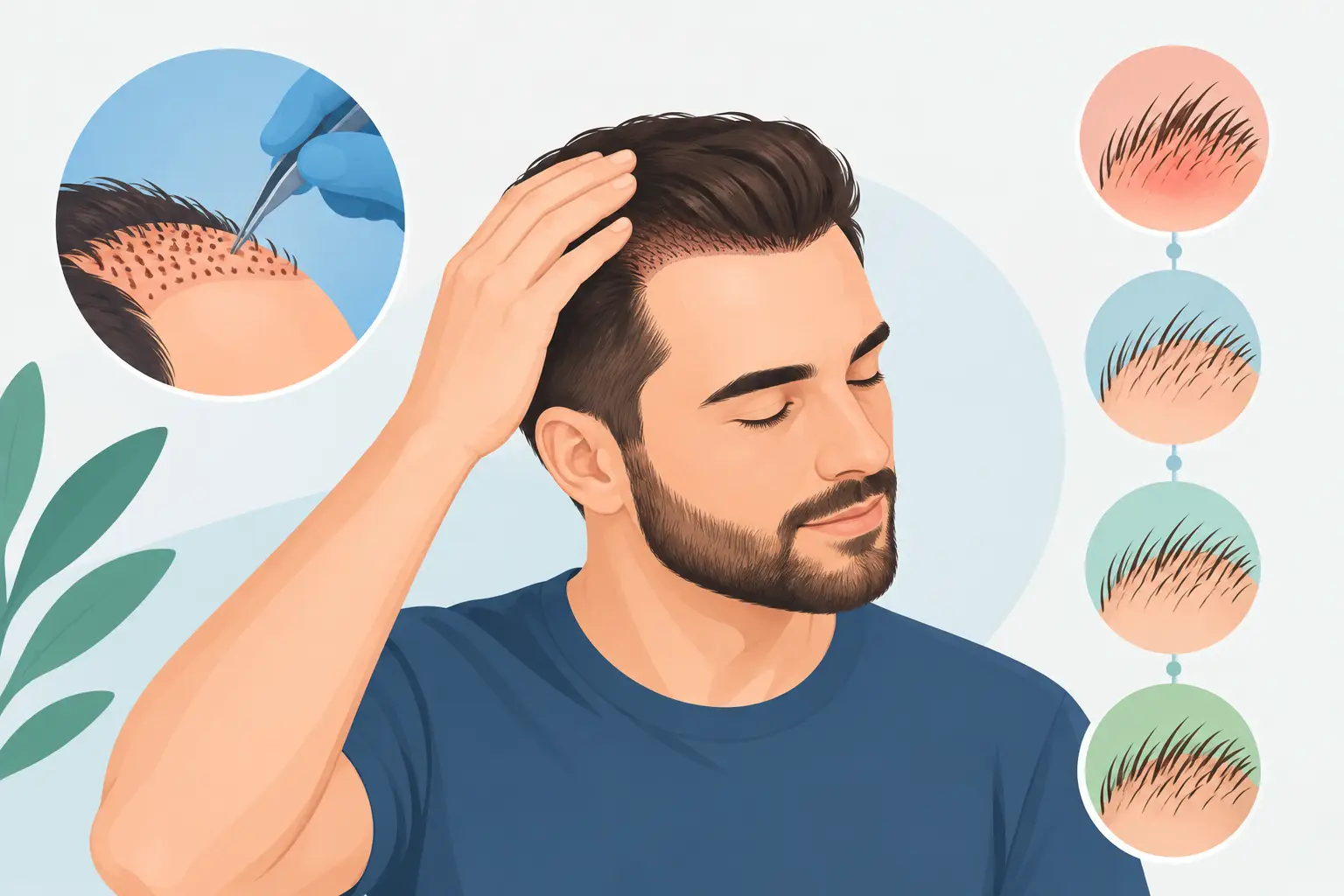
During FUE, Sapphire FUE, or DHI hair transplantation, follicles are extracted from the donor area, usually at the back and sides of the scalp, and placed into carefully designed recipient sites. Local anesthesia temporarily blocks sensation during the procedure. More importantly, the creation of extraction and implantation sites can disturb tiny superficial sensory nerves in the skin.
These nerves are not usually permanently damaged. They need time to settle and regenerate. While this happens, you may notice numb patches in the donor zone, reduced sensation around the hairline, tenderness when touching the scalp, or intermittent tingling. The donor area is often more noticeably numb than the recipient area because it undergoes many small extractions.
Scalp sensitivity and hair graft survival are separate issues. A lack of feeling does not mean grafts have been dislodged or that growth will be affected. In the first days after surgery, protecting the grafts from pressure, scratching, and friction matters far more than checking sensation.
When does scalp sensitivity return after hair transplantation?
Most patients can expect a staged return of sensation rather than one dramatic moment when the scalp feels completely normal again. The following timeline is a useful guide, but it is not a guarantee for every individual.
The first week: numbness, swelling, and tenderness
For the first several days, residual anesthetic effects, mild swelling, and inflammation can make the scalp feel strange. The recipient area may be tender or tight, while the donor area can be numb to touch. Some patients describe a helmet-like feeling across the scalp.
This period calls for gentle handling. Follow your washing instructions precisely, sleep in the recommended position, and avoid rubbing the treated areas. Do not use scalp massage, hot water, or styling products unless your medical team has cleared them.
Weeks two to six: tingling can signal recovery
As early healing progresses, numbness often begins to shrink. Tingling, itching, prickling, or occasional brief shooting sensations can appear as nerve endings reactivate. These feelings can be inconvenient, especially at night, but they are commonly associated with recovery.
Itching also has other causes, including dry skin, scab shedding, and new hair growth. Scratching is never the answer. Your clinic may recommend an appropriate spray, lotion, or medication based on your stage of recovery.
One to three months: clear improvement for many patients
By the second or third month, many patients report that most normal sensation has returned. The scalp may still feel slightly different in small areas, particularly in a larger FUE session or where dense graft placement was needed to refine a hairline, crown, or part line.
This is also the phase when transplanted hairs commonly shed before entering their new growth cycle. That shedding can create unnecessary worry, but it is different from sensory recovery. The scalp can feel almost normal while the visible result remains in its early, quiet stage.
Three to six months: lingering numbness usually resolves
For many people, any remaining numbness continues to improve between three and six months. Fine touch sensation can be the last to normalize. Patients with naturally sensitive skin may become more aware of the recovery process, while others barely notice it after the first few weeks.
With larger procedures, repeat transplants, or more extensive donor work, recovery can take longer. A small area of altered sensation may persist for six to 12 months, though this is less common with careful, minimally invasive extraction techniques.
What affects your sensation recovery timeline?
The number of grafts matters. A procedure restoring a modest hairline requires less donor-area work than a high-graft session designed to address extensive thinning across the frontal scalp, mid-scalp, and crown. More extraction sites may mean a longer period of donor-area tenderness or numbness.
Technique also plays a role. Modern FUE-based approaches are designed to minimize visible scarring and tissue disruption, but they still involve thousands of precise micro-incisions. Sapphire blades may support controlled recipient-site creation, while DHI can provide detailed placement control in selected cases. Neither technique can promise an identical sensory timeline for every patient.
Your own healing biology is equally relevant. Diabetes, smoking, poor circulation, nutritional deficiencies, previous scalp surgery, and inflammatory skin conditions may delay recovery. If you take blood thinners or have a history of abnormal wound healing, your surgeon should know before planning treatment.
The quality of surgical planning matters as well. Hair restoration is not simply about placing the highest possible graft count. A physician-led plan considers safe donor management, appropriate depth and angle of implantation, natural density design, and recovery requirements. This balance protects both the appearance of the result and the long-term health of your donor area.
How to support comfortable scalp healing
You cannot force nerves to regenerate faster, but you can avoid setbacks. Take prescribed medications exactly as directed and use only products approved by your medical team. Keep the scalp clean according to your post-procedure washing protocol, but avoid vigorous rubbing or picking at scabs.
Avoid smoking and nicotine, which can compromise circulation during early healing. Limit alcohol if your surgeon advises it, stay hydrated, and protect your scalp from direct sun exposure. Strenuous exercise, swimming, saunas, and heavy sweating are typically restricted for a period after treatment because they can irritate healing skin.
For international patients, recovery planning should begin before the flight home. Choose comfortable headwear only if it has been approved, avoid compressing the grafts, and keep your aftercare instructions and clinic contact details accessible. HairNeva provides personalized follow-up guidance so patients can continue their recovery with confidence after returning to the US or another home destination.
When numbness needs medical advice
Temporary numbness is expected. However, contact your surgeon promptly if sensation loss becomes worse rather than gradually improving, or if it occurs with escalating pain, spreading redness, warmth, pus-like drainage, fever, or significant swelling. These symptoms can indicate infection or another issue requiring assessment.
You should also seek advice if you develop severe burning pain, a darkening or pale patch of skin, persistent bleeding, or an allergic reaction to a medication or topical product. Do not self-treat with harsh antiseptics, unapproved creams, or supplements marketed as nerve cures. The right response depends on the cause.
If numbness remains unchanged for several months, schedule a follow-up even if there are no warning signs. Your surgeon can examine the donor and recipient areas, review your health history, and give you a realistic expectation for continued recovery.
Sensation returns before the final cosmetic result
One reason scalp numbness feels frustrating is that it arrives during a period when the visible transformation is still ahead. Hair transplantation requires patience. Early healing protects the grafts, shedding makes room for the next growth cycle, and new hairs gradually emerge over the following months.
A natural-looking outcome depends on thoughtful design and careful technique, but also on allowing the scalp time to recover without unnecessary interference. If your scalp feels different after treatment, give it the same patience you are giving your new hair. Consistent aftercare and direct communication with your surgical team can make the recovery feel far more predictable and reassuring.