Can You Have a Hair Transplant With Low Donor Density?
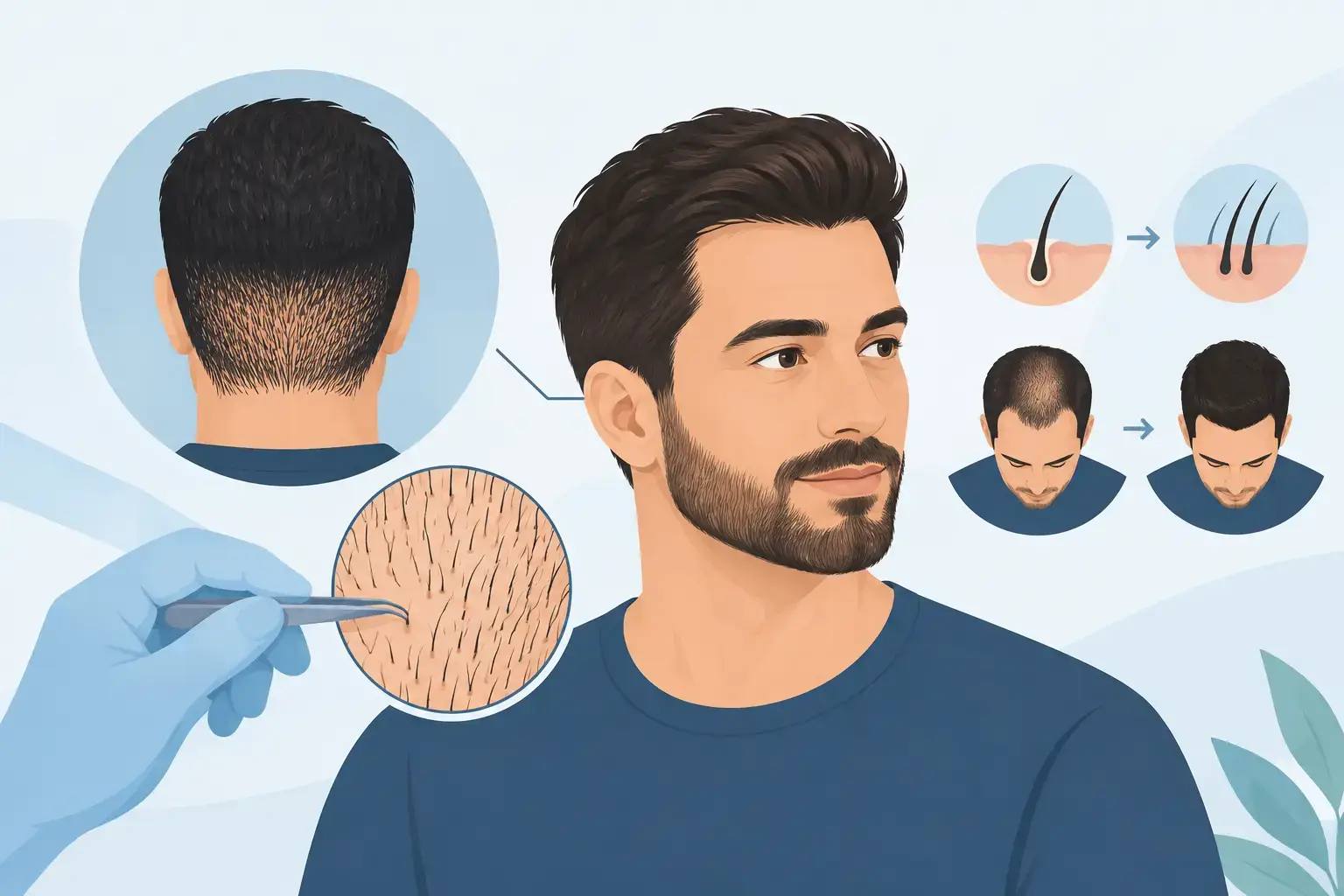
Can you have a hair transplant with low donor density? See how surgeons assess graft supply and design a safe plan for natural results with confidence.
- What Low Donor Density Really Means
- Can You Have a Hair Transplant With Low Donor Density Safely?
- How a Surgeon Evaluates Donor Potential
- Strategies That Can Make a Transplant Possible
In this article9
- What Low Donor Density Really Means
- Can You Have a Hair Transplant With Low Donor Density Safely?
- How a Surgeon Evaluates Donor Potential
- Follicular Unit Density and Hair Quality
- Donor Area Stability
- Current and Future Hair Loss
- Strategies That Can Make a Transplant Possible
- When Surgery May Not Be the Best First Step
- Questions Worth Asking at Your Consultation
A sparse donor area does not automatically rule out surgery. If you are asking, can you have a hair transplant with low donor density?, the honest answer is yes, in selected cases – but only when the plan respects the limits of your available grafts. The goal is not to remove as many follicles as possible. It is to create a natural improvement while preserving the appearance and long-term health of the donor area.
For many patients, this requires more careful planning than a standard hair transplant. A surgeon-led assessment can determine whether a conservative transplant, a different graft strategy, medical support, or a staged approach is the right path forward.
What Low Donor Density Really Means
The donor area is usually the back and sides of the scalp, where follicles tend to be more resistant to androgen-related hair loss. Donor density refers to how many follicular units are present per square centimeter. Each unit may contain one, two, three, or occasionally more hairs.
Low donor density may mean there are fewer follicular units overall, fewer hairs within each unit, or both. These are different situations. A patient with fewer grafts but mostly two- and three-hair follicular units may still have useful coverage potential. Someone with a dense-looking donor area but predominantly single-hair units may have more limited volume for larger areas of baldness.
Density is also only one part of the picture. Hair caliber, curl pattern, contrast between the hair and scalp, scalp laxity, and the stability of hair loss all affect what can be achieved. Coarse, wavy hair with low skin contrast can often create a fuller visual effect with fewer grafts than fine, straight hair against a lighter scalp.
Can You Have a Hair Transplant With Low Donor Density Safely?
Yes, but safety depends on careful graft budgeting. The central risk is overharvesting. Taking too many follicular units from a limited donor supply can leave the back or sides of the scalp visibly thin, patchy, or moth-eaten. No patient should trade one conspicuous area of thinning for another.
A responsible surgeon looks beyond the number of grafts requested. They assess the size of the recipient area, the likely progression of future hair loss, and how much donor hair can be extracted while maintaining an even appearance. This is especially relevant for younger patients whose hair loss pattern may expand over time.
The best plan may prioritize the hairline and frontal third rather than trying to cover the entire scalp. The frontal area frames the face, so thoughtful placement there can produce a meaningful cosmetic change even when graft supply is limited. Dense packing across a large crown is rarely the right choice when donor reserves are low.
Naturalness matters more than an aggressive graft count. A well-designed, conservative transplant can look refined and age appropriately. An oversized hairline or unrealistic density target can exhaust the donor area and compromise future options.
How a Surgeon Evaluates Donor Potential
A meaningful consultation should include more than a quick visual check or photos taken from one angle. The donor zone needs to be examined systematically, including areas that may be vulnerable to diffuse thinning or retrograde alopecia.
At HairNeva, advanced analysis such as HairMetrix can support a more precise evaluation of hair density, shaft diameter, and donor characteristics. This type of assessment helps turn an assumption into a treatment plan based on measurable information.
Follicular Unit Density and Hair Quality
The surgeon measures or estimates follicular units across several points in the donor area. Averages can be misleading, so variation matters. One section may be strong enough for conservative extraction while another should be left untouched.
Hair shaft diameter is equally relevant. Thick shafts create more coverage per graft than fine shafts. The number of hairs per follicular unit also changes the calculation. The practical question is not simply, “How many grafts do I have?” It is, “How much visible coverage can those grafts create without weakening the donor area?”
Donor Area Stability
Not every hair at the back of the scalp is permanent. Some patients experience diffuse thinning throughout the donor region, while others have patterns of hair loss that extend unusually low on the neck and around the ears. Extracting from unstable hair increases the risk that transplanted follicles may thin in the future.
An experienced physician identifies safer zones and avoids treating a potentially unstable area as unlimited supply. This may reduce the graft estimate, but it protects the quality and durability of the result.
Current and Future Hair Loss
A transplant redistributes existing hair. It does not stop genetic hair loss. If native hair behind the transplant continues to thin, the patient may eventually need further treatment. With low donor density, preserving grafts for the future is particularly valuable.
For this reason, some candidates benefit from medical or regenerative hair-loss support before surgery. Depending on the diagnosis and medical suitability, this may help stabilize shedding and improve the appearance of existing hair. It cannot create new donor follicles, but it can reduce the amount of surgical coverage needed.
Strategies That Can Make a Transplant Possible
Low donor density does not call for a one-size-fits-all technique. The method should be selected around the patient’s donor characteristics, hairstyle, goals, and need for discretion.
FUE can be an excellent option because follicular units are extracted individually and distributed across the safe donor zone. With proper spacing, this can minimize visible depletion. However, FUE is not permission to overextract. Precision in punch selection, extraction pattern, and graft handling remains essential.
DHI may be considered when controlled implantation and careful placement are priorities, particularly around the hairline or between existing hairs. Sapphire FUE can also support refined recipient-site creation. These techniques can improve the surgical process, but they do not increase the number of grafts available. The quality of the plan always comes first.
For some patients, a conservative hairline restoration provides the highest return on limited grafts. Others may benefit from adding beard grafts to increase coverage, particularly in the mid-scalp or crown. Beard hair is typically coarser and is not a perfect match for a soft frontal hairline, but it can be valuable when used strategically behind it.
Scalp micropigmentation may also help create the appearance of greater density in selected cases. It is not a replacement for hair, but it can reduce scalp-to-hair contrast and complement a conservative transplant. A transparent consultation should explain where these approaches can help and where they cannot.
When Surgery May Not Be the Best First Step
There are circumstances in which delaying or avoiding surgery is the safest recommendation. Active, rapidly progressing hair loss can make a transplant difficult to plan. Diffuse unpatterned alopecia, severe donor miniaturization, certain inflammatory scalp conditions, and unrealistic expectations may also require a different approach.
A patient who wants full density from hairline to crown but has a very limited donor supply should receive a direct answer, not a sales promise. Surgical planning is about managing finite resources. If the available graft supply cannot safely meet the desired outcome, the plan should be revised.
That may mean treating a smaller area, using non-surgical support first, considering complementary cosmetic options, or deciding that surgery is not appropriate. This is not a failure of treatment. It is good medical judgment.
Questions Worth Asking at Your Consultation
Ask how many grafts can be safely extracted, how that estimate was calculated, and what the donor area is expected to look like after healing. You should also ask whether your donor hair appears stable, how your future hair loss could affect the result, and whether the proposed design preserves options for later in life.
Be cautious of clinics that promise a specific high graft number before examining your scalp in detail. A graft count is not a measure of quality on its own. For low donor density, thoughtful allocation, natural hairline design, and donor preservation are far more meaningful than a dramatic number.
The right transplant should leave you looking like yourself with stronger framing, better balance, and renewed confidence – while keeping enough reserve for the years ahead. A detailed surgeon-led assessment is where that future-focused plan begins.