What Should a Turkey Hair Transplant Package Include?

What should be included in a hair transplant package in Turkey? Learn the essential medical, travel, and aftercare details that protect your results.
- What Should Be Included in a Hair Transplant Package in Turkey?
- Travel Support Should Simplify, Not Distract
- Aftercare Is Part of the Result
- What a Transparent Quote Should Explain
In this article6
A hair transplant package can look impressive on a quote and still leave critical questions unanswered. For international patients, the real value is not simply airport pickup or a hotel night. It is knowing who plans your hairline, who performs each clinical step, what happens if you need support after flying home, and whether the proposed graft count protects your donor area.
So, what should be included in a hair transplant package in Turkey? A credible package should bring together physician-led planning, a clearly defined procedure, safe clinical standards, coordinated travel support, and structured aftercare. The details matter because a natural-looking result is built long before the procedure day.
What Should Be Included in a Hair Transplant Package in Turkey?
The first element is a personalized medical assessment, not a generic promise of unlimited grafts. Before travel, the clinic should review clear photos or a video consultation to assess your pattern of hair loss, donor density, scalp characteristics, hair caliber, and long-term goals. If you are considering a female, unshaven, Afro-textured, beard, or eyebrow transplant, the assessment should address the specific technical considerations of that procedure.
A professional plan also considers what should not be transplanted. An overly low hairline, excessive density in one session, or aggressive harvesting can compromise future options. Your package should include a realistic graft estimate and an explanation of how those grafts will be distributed across the hairline, temples, frontal zone, mid-scalp, or crown. The best plan is not the one that promises the most grafts. It is the one that balances visible improvement with donor preservation and age-appropriate design.
Surgeon involvement and clinical accountability
Ask for clarity about the medical team before committing. Turkey has outstanding hair restoration centers, but standards vary widely. A package should identify the physician responsible for your diagnosis, aesthetic design, and medical oversight, as well as the trained team members involved in extraction, channel opening, and implantation.
This distinction is particularly meaningful for the hairline and recipient-site design. Graft angle, direction, density, and irregularity determine whether transplanted hair grows in a way that looks convincingly natural. A surgeon-led approach offers greater accountability for these aesthetic decisions and for your safety throughout the procedure.
At a premium clinic, your package should also include the chosen method when it is medically appropriate. This may be FUE, Sapphire FUE, or DHI. These are not interchangeable marketing labels. Sapphire blades may support precise recipient-site creation, while DHI can offer controlled implantation in selected cases. The right technique depends on your hair characteristics, area of loss, desired density, and whether you want to avoid shaving a visible area.
The procedure and essential medical care
The core package should state exactly what happens on treatment day. That usually includes pre-operative preparation, local anesthesia, donor extraction, graft sorting and preservation, recipient-area preparation, implantation, and post-procedure checks. It should also confirm whether standard blood tests, medications, and consumable materials are included or billed separately.
Comfort matters, but safety matters more. Look for a sterile clinical setting, documented consent, a review of your medical history, and clear instructions about medications, smoking, alcohol, and supplements before surgery. If you use blood thinners, have diabetes, live with a scalp condition, or have an unstable form of hair loss, you may need additional clearance or may be advised to delay treatment. A trustworthy clinic does not treat every inquiry as an automatic candidate.
Your package should include an immediate post-operative review and the first professional wash, typically performed the day after surgery or according to the clinic’s protocol. This appointment is more than a cosmetic extra. It gives the team an opportunity to inspect the grafts, demonstrate gentle washing, manage swelling concerns, and make sure you understand the first critical days of recovery.
Travel Support Should Simplify, Not Distract
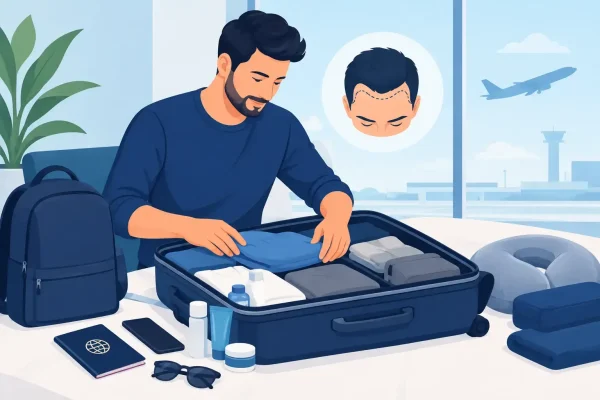
For US patients, travel coordination can make treatment in Istanbul significantly less stressful. A well-organized package often includes private airport transfers, transportation between the hotel and clinic, and accommodation for the recommended number of nights. The hotel should be appropriate for post-procedure rest and conveniently located for your follow-up appointment.
Multilingual patient coordination is equally valuable. You should be able to ask questions in clear English before arriving, receive a readable treatment schedule, and know whom to contact if your flight changes or you need assistance during your stay. These services are supportive, but they should never be used to distract from questions about the medical team or the procedure itself.
Confirm the exact travel inclusions in writing. Some packages include hotel and transfers but exclude flights, meals, companion accommodation, additional nights, or upgraded room categories. There is nothing wrong with exclusions when they are transparent. The concern is a low advertised price that becomes unclear once you begin organizing your trip.
Aftercare Is Part of the Result
Hair transplantation is a process, not a single appointment. The package should include a take-home aftercare kit and written instructions for the first weeks. Depending on the clinic’s protocol, this may include shampoo, lotion or foam, saline spray, a neck pillow, pain relief guidance, antibiotics when clinically indicated, and instructions for sleeping, washing, exercise, sun exposure, and headwear.
You should also receive a recovery timeline that prepares you for normal shedding. Transplanted hairs commonly shed in the weeks after surgery before new growth begins. Early growth can be fine and uneven, while more visible change often develops gradually over several months. Final maturation may take 12 months or longer, especially in the crown. A clinic that presents immediate density as a finished result is setting the wrong expectation.
Remote follow-up is especially important for medical tourists. Ask whether the package includes check-ins through photos or video, who reviews your progress, and how long the clinic remains available to answer questions. At HairNeva, ongoing patient guidance is designed to support international patients well beyond their Istanbul visit, because confidence in recovery should not end at the airport.
Some centers offer a lifetime hair transplant warranty certificate. This can be reassuring, but read the terms carefully. A warranty should explain what is covered, what documentation is required, whether it applies to graft survival or a touch-up assessment, and which factors fall outside coverage. Progressive native hair loss, untreated medical causes of shedding, and failure to follow aftercare instructions can affect results independently of a successful transplant.
What a Transparent Quote Should Explain
A complete quote should describe inclusions, exclusions, the technique, estimated graft range, number of procedure days, hotel nights, transfers, medications, and aftercare. It should also explain whether PRP, mesotherapy, laser care, stem cell therapy, or exosome therapy is included, optional, or recommended separately. These supportive treatments may suit some patients, but they should not be presented as mandatory add-ons without a clear clinical rationale.
Be cautious with packages built around vague phrases such as “maximum grafts” or “all-inclusive” without specifics. More grafts are not automatically better, and no responsible clinic can guarantee an identical density outcome for every patient. Your natural hair characteristics, scalp condition, healing response, and the progression of hair loss all influence the final appearance.
The most useful question is not, “What is the cheapest package?” Ask, “What does this plan protect?” It should protect your donor area, your health, your time abroad, and your ability to make an informed decision. A detailed package reflects a clinic that sees you as a long-term patient rather than a procedure slot.
Choose the team that can explain your plan with precision, show why each recommendation fits your hair loss pattern, and remain available as your new growth takes shape. That is the kind of care that supports a result you can wear with confidence.