Can You Travel by Air Immediately After a Hair Transplant?

Can you travel by air immediately after a hair transplant? Learn when flying is safe, how to protect grafts, and plan your recovery with full confidence.
- Can You Travel by Air Immediately After a Hair Transplant?
- The Preferred Waiting Period Before Flying
- Why Long-Haul Flights Need More Planning
- How to Protect Your Grafts at the Airport and on the Plane
In this article7
- Can You Travel by Air Immediately After a Hair Transplant?
- The Preferred Waiting Period Before Flying
- Why Long-Haul Flights Need More Planning
- How to Protect Your Grafts at the Airport and on the Plane
- Your Flight-Day Aftercare Checklist
- Does the Technique Change When You Can Fly?
- When to Contact Your Clinic Before You Fly
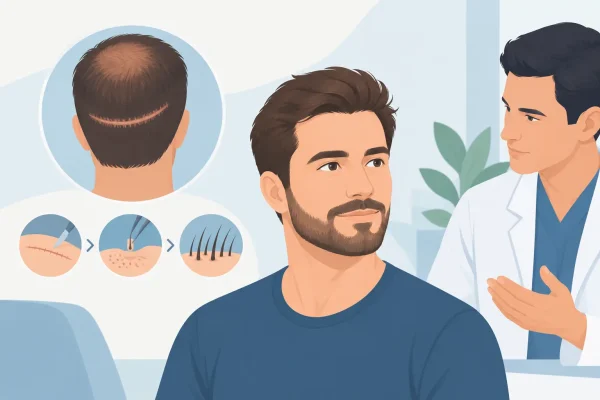
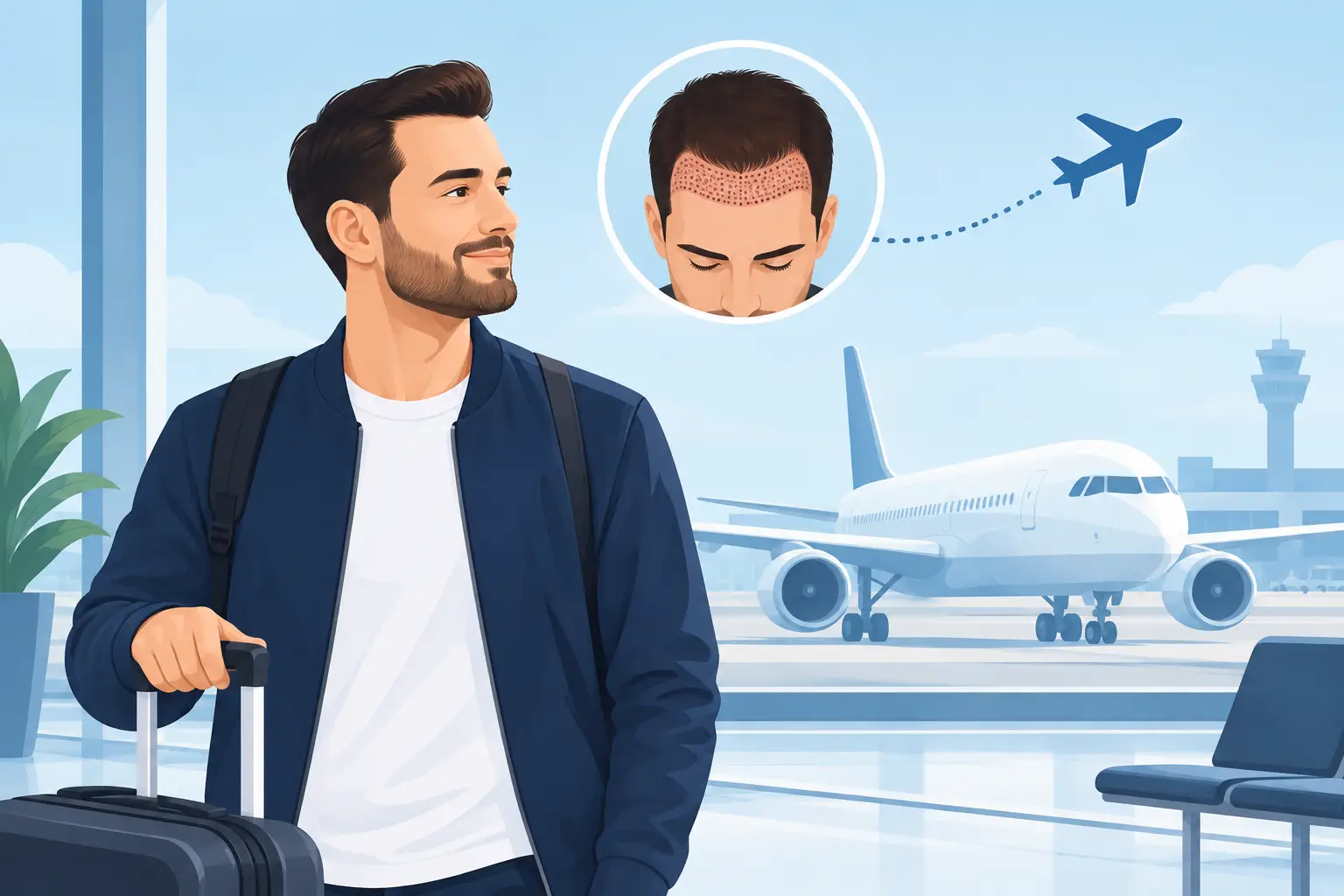
Your flight home should be part of your treatment plan, not an afterthought. Can you travel by air immediately after a hair transplant? In most cases, flying on the same day is not recommended. Your newly placed grafts need a calm, protected start, and the first 24 to 72 hours are when careful aftercare makes the greatest difference.
For international patients visiting Istanbul, this timing matters even more. A hair transplant may take several hours, and your scalp can feel tender, swollen, or numb afterward. Building recovery time into your itinerary gives you the opportunity to rest, attend your first wash if advised, and receive direct post-procedure guidance before a long flight.
Can You Travel by Air Immediately After a Hair Transplant?
Technically, many patients can fly soon after an FUE, Sapphire FUE, or DHI hair transplant. Cabin pressure itself does not normally dislodge grafts. The concern is not that an airplane will undo the procedure. It is that same-day travel can make the earliest stage of recovery harder to manage.
After surgery, the recipient area contains thousands of delicate grafts. They are most vulnerable to rubbing, scratching, impact, pressure from headwear, and accidental contact. A crowded airport, security lines, overhead bins, rushed boarding, and an overnight flight all create opportunities for avoidable irritation.
Anesthesia can also leave you tired. If swelling begins while you are traveling, it may be less comfortable and more difficult to address. Patients who have had sedation should not drive themselves to the airport or make travel decisions without a responsible companion and their medical team’s approval.
The right answer depends on your procedure, the size of the transplant, your medical history, whether you received sedatives, and the length of your flight. Your surgeon’s instructions should always take priority over a general timeline.
The Preferred Waiting Period Before Flying
For many hair transplant patients, staying in Istanbul for at least two to three nights after the procedure is the more comfortable and cautious option. This gives the clinical team time to review your scalp, perform or guide the first wash when appropriate, and confirm that you are recovering as expected.
Patients traveling from Turkey to the United States often benefit from planning a return flight around day three or later. This is particularly sensible after a larger session, a dense hairline design, or a procedure involving extensive work in both donor and recipient areas. It also reduces the pressure of managing long-haul travel immediately after surgery.
Some patients may be cleared to fly earlier, particularly after a smaller procedure and when they have reliable support. Others may be advised to wait longer because of swelling, medical considerations, or individual healing needs. A premium treatment plan should account for the person in the chair, not apply the same departure schedule to everyone.
Why Long-Haul Flights Need More Planning
A flight from Istanbul to the US is not a short commute. You may be seated for 10 hours or more, moving through busy terminals before and after the flight. The grafts are not at risk because of altitude, but the travel environment can challenge your comfort and aftercare routine.
Swelling commonly appears around the forehead and eyes in the days after a hair transplant. It is temporary, but a long flight, fatigue, and limited ability to recline comfortably can make it feel more noticeable. Your clinic may provide medication and specific sleeping instructions to help minimize it.
Dehydration is another practical concern. Aircraft cabins are dry, and patients often forget to drink enough water while traveling. Alcohol should be avoided during the early healing period because it can worsen swelling and interfere with recovery guidance. Follow the medication schedule supplied by your medical team, including instructions about pain relief or antibiotics if they have been prescribed.
Do not treat a long-haul flight as a reason to wear a tight cap over fresh grafts. If your clinic approves head covering for travel, it should be loose, clean, and placed without dragging across the transplanted area. The timing and type of covering matter, so ask before packing one.
How to Protect Your Grafts at the Airport and on the Plane
The first week requires awareness, not isolation. You can move through the airport safely when you slow down and avoid unnecessary contact with your scalp. Protecting your result is largely about preventing the small, careless moments that can disturb a healing graft.
Keep carry-on luggage light enough that you do not need to force a heavy bag into an overhead compartment. If possible, ask a travel companion or airline staff member for assistance. Avoid bending sharply or straining, particularly during the first few days, since your clinic may ask you to limit activities that can increase swelling.
Choose clothing that opens at the front, such as a button-down shirt or zip-up top. Pulling a tight T-shirt over your head can catch the recipient area. A supportive neck pillow may be useful on a long flight, but position it so it supports your neck without pressing against the transplanted zone or donor area.
At security and during boarding, be mindful of backpacks, shoulder bags, and other passengers’ hands or luggage. A simple, polite request for personal space is reasonable. You do not need to explain your procedure to anyone, but you do deserve to protect your recovery.
Your Flight-Day Aftercare Checklist
Before leaving for the airport, confirm that you have your aftercare supplies, medications, and your clinic’s contact details in your carry-on. Do not pack essential medication or saline spray in checked luggage. Be sure any liquids meet airport security requirements.
During the journey, avoid touching the grafts unless you have been specifically instructed to apply an approved product. Do not scratch, pick at scabs, or try to check the grafts repeatedly in a mirror. Mild itching can happen during healing, but rubbing the scalp is not the answer.
Keep the recipient area away from direct sun. A window seat may expose your scalp to strong sunlight, especially during daytime travel. If your surgeon has approved a loose protective covering, use it exactly as directed. Otherwise, choose shade where possible and follow your clinic’s sun-avoidance advice once you arrive.
Sleep can be difficult after a transplant, particularly on a plane. Try to maintain the head-elevated position recommended by your medical team. Do not lean the recipient area against a headrest, window, or another passenger. Small adjustments can make a meaningful difference in comfort.
Does the Technique Change When You Can Fly?
Whether you choose DHI, FUE, Sapphire FUE, an unshaven procedure, or a female hair transplant, the core travel principles are similar. Every technique involves a healing donor area and carefully placed grafts that require protection in the first days.
DHI can offer precise implantation with a Choi implanter, while Sapphire FUE uses refined sapphire blades for channel creation. These technique choices may influence your treatment design and recovery experience, but they do not make same-day international travel automatically advisable. The extent of the session and your individual condition matter more than the name of the technique.
At HairNeva, travel planning is addressed during the consultation process because it is part of delivering a controlled, natural-looking result. A surgeon-led assessment can help determine the appropriate procedure, the expected recovery schedule, and a return-flight window that supports your safety and confidence.
When to Contact Your Clinic Before You Fly
Speak with your clinic promptly if you experience excessive bleeding, severe or worsening pain, a fever, spreading redness, significant swelling that concerns you, or any reaction to medication. These symptoms do not necessarily mean a serious problem, but they should be assessed before you begin a long journey.
You should also contact your team if your flight is moved forward unexpectedly. A schedule change may affect your planned wash, follow-up examination, or medication timing. A reputable clinic will give you practical guidance based on your procedure rather than offering a generic reassurance.
A hair transplant is a long-term investment in your appearance and self-confidence. Giving yourself a few protected days in Istanbul before flying home is a small decision that can make the recovery feel calmer, more private, and far easier to manage.