Can you wear glasses after a hair transplant? Learn when frames are safe, how to avoid pressure on grafts, and what to ask your surgeon after surgery.
- Can You Wear Glasses After a Hair Transplant Right Away?
- Why Glasses Can Matter During Recovery
- What to Do If You Need Glasses Every Day
- A Practical Recovery Timeline for Eyeglasses
In this article7
The answer to can you wear glasses after a hair transplant? is usually yes, but not always immediately and not without a plan. Your glasses may seem unrelated to your procedure, yet the arms of the frame can create friction or pressure near the donor area behind the ears, while oversized frames can come close to newly placed grafts at the temples. In the first days after surgery, small details like this can protect the precision of your result.
The safest approach is to follow the instructions for your individual procedure, recipient area, and frame style. A surgeon-led recovery plan considers exactly where grafts were placed, how the donor region was harvested, and whether your glasses touch any healing skin.
Can You Wear Glasses After a Hair Transplant Right Away?
If your glasses rest only on the bridge of your nose and do not touch transplanted or donor areas, many patients can wear them carefully. However, that does not mean every pair of glasses is suitable on day one. The concern is not the lenses themselves. It is sustained contact, rubbing, compression, or accidentally catching a healing area when putting frames on or taking them off.
For most FUE, Sapphire FUE, and DHI hair transplant patients, the greatest caution is needed during the first 7 to 10 days. This is the period when newly implanted grafts are settling into place and scabs are forming. By roughly 10 to 14 days, graft anchoring is generally much more secure, but your care team may still recommend avoiding unnecessary friction until the scalp has fully calmed.
The timeline can change if grafts were placed in the temporal points, sideburns, or very low along the hairline. Those areas can sit close to the ends of eyeglass arms. It can also change when the donor zone extends lower behind the ears or when a patient has had a large session with extensive extraction.
Why Glasses Can Matter During Recovery
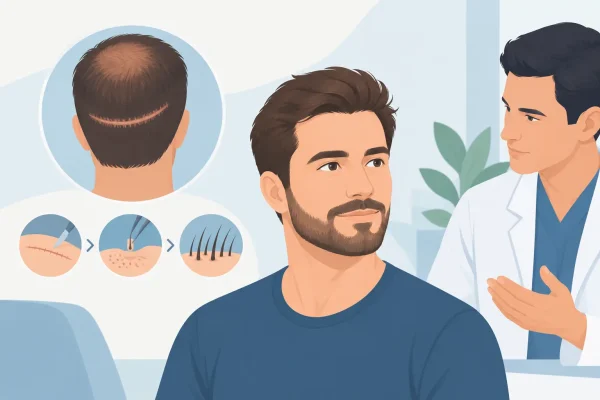
Modern hair restoration is minimally invasive, but it remains a surgical procedure. Each graft is placed with careful attention to angle, direction, density, and the natural character of your existing hair. Protecting that work is part of achieving a refined, natural-looking outcome.
The arms of eyeglasses may press against the skin behind the ears or along the sides of the head. If that skin is swollen, tender, shaved, or recently harvested, pressure can be uncomfortable and may irritate healing follicles. Frames can also trap sweat or rub against scabs if they shift during travel, sleep, or daily activity.
There is a second issue for patients receiving hairline work. When you slide glasses upward, remove them quickly, or wear wide frames, the top corners can brush the frontotemporal scalp. A single light touch is unlikely to ruin a transplant, but repeated rubbing is avoidable risk during the early healing window.
What to Do If You Need Glasses Every Day
Patients who rely on prescription glasses for work, driving, or navigation should not feel that surgery makes normal life impossible. The goal is to reduce contact with healing areas, not to leave you unable to see clearly. Before your procedure, show your usual frames to your medical team. A quick review can identify whether the arms sit directly over the donor zone or close to planned graft placement.
During the first week, wear the lightest, narrowest pair you own if it keeps the arms away from sensitive skin. Put them on slowly with two hands and remove them the same way. Avoid pushing them up from the side, resting them on your forehead, or hooking them into your hair.
If the frame arms press on the donor area, your surgeon may suggest temporarily using contact lenses if you already wear and tolerate them. Do not begin using contacts for the first time immediately after surgery, especially if your eyes tend to become dry during flights or recovery. Some patients can use a carefully positioned support that lifts the arms slightly away from the scalp, but only if their clinic approves the method. A poorly placed strap, tape, or padding can create more friction rather than less.
For reading at home, consider taking brief breaks from glasses when it is safe to do so. For driving, work, and travel, clear vision comes first. Use the safest pair available and ask for individualized guidance rather than guessing.
Sunglasses Need the Same Care
Sunglasses are often wider, heavier, and more likely to sit high on the cheeks or sides of the head. They can be especially tempting in Istanbul or during the journey home, when patients want privacy and protection from sunlight. Keep in mind that sunglasses do not protect scalp grafts from direct sun if they leave the hairline exposed.
For the early recovery period, avoid heavy wraparound styles or frames with thick arms unless your clinical team has confirmed they clear the treated areas. If you must go outside, follow your aftercare instructions on sun exposure and headwear. Do not let a hat or sunglasses rub against fresh grafts simply for the sake of coverage.
A Practical Recovery Timeline for Eyeglasses
Every scalp heals at its own pace, but this general framework helps patients plan:
- Days 0 to 3: Minimize glasses wear if the frame touches the donor area, temples, sideburns, or recipient zone. Swelling and tenderness can make pressure more noticeable.
- Days 4 to 7: Glasses may be worn cautiously when they rest clear of treated skin. Check for redness, soreness, or scab disturbance after use.
- Days 8 to 14: Most grafts are becoming more stable, though rubbing and pressure should still be avoided. This is often when patients can return to more normal eyewear routines with clearance from their surgeon.
- After two weeks: Most patients can wear their usual glasses comfortably, provided healing is progressing normally and there are no concerns with the donor area or temple grafts.
This is guidance, not a replacement for your post-operative instructions. A patient who has had an unshaven procedure, dense frontal restoration, female hair transplant, eyebrow transplant, or treatment involving the sideburn region may need a more specific plan.
Signs Your Frames Are Causing a Problem
Mild tenderness around the donor area can be normal after FUE, especially in the first several days. But glasses should not cause increasing pain or leave persistent marks. Contact your clinic if you notice bleeding, fresh swelling, warmth, spreading redness, discharge, or a scab that has been forcefully pulled away after wearing frames.
You should also ask for advice if you are unsure whether a follicle has been dislodged. Avoid inspecting the area repeatedly, touching it, or trying to replace a graft yourself. Clear photographs sent according to your clinic’s instructions are often more useful than self-treatment.
Plan Ahead Before You Travel
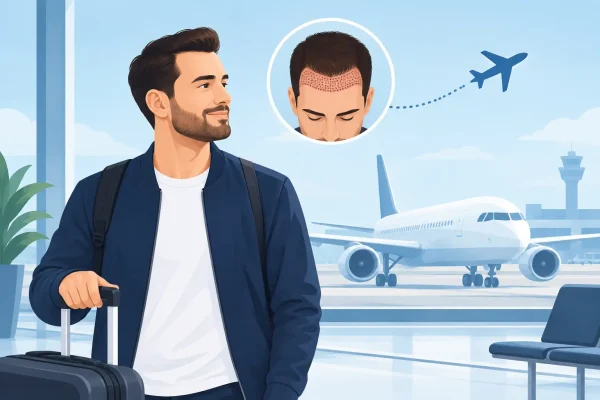
For international patients, eyewear planning belongs on the same checklist as medication, loose front-opening clothing, and flight arrangements. Bring a lightweight backup pair, your contact lenses if you routinely use them, and a protective case so your frames are not bent or pressed into the scalp in a bag.
During the flight home, avoid sleeping in a way that pushes glasses into the donor area. Remove them before resting, keep them in their case, and follow the recommended sleeping position. Cabin air can be dry, and fatigue can make it easy to rub your eyes or scalp without thinking, so simple preparation makes recovery more comfortable.
At HairNeva, post-operative guidance is tailored to the procedure and the aesthetic zones treated, because a natural result depends on both surgical precision and disciplined aftercare. The right answer is not a blanket ban on glasses. It is knowing where your frames sit, protecting vulnerable areas in the first days, and giving your grafts the calm environment they need to settle.
If glasses are part of your daily life, mention them during your consultation and bring your usual pair on procedure day. That small conversation can make your recovery more comfortable and keep your focus where it belongs: on the confidence of seeing your new hairline take shape.