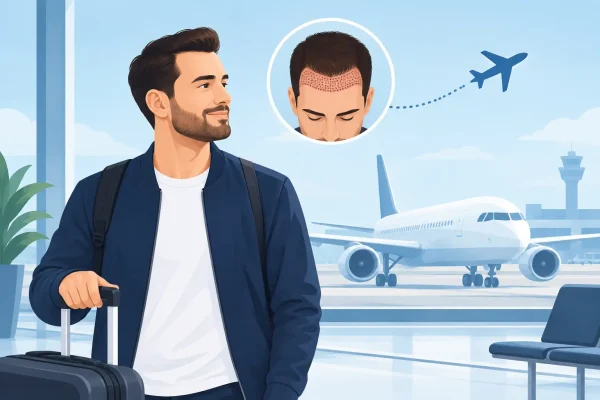
International patient experience & treatment planning for hair restoration, from surgeon-led assessment and travel support to confident aftercare at home.
- Treatment Planning Starts With the Right Questions
- International Patient Experience and Treatment Planning Before Travel
- What a Surgeon-Led Hair Transplant Visit Should Feel Like
- Planning for Recovery From Istanbul to Home
In this article6
- Treatment Planning Starts With the Right Questions
- International Patient Experience and Treatment Planning Before Travel
- What a Surgeon-Led Hair Transplant Visit Should Feel Like
- Planning for Recovery From Istanbul to Home
- How to Evaluate an International Hair Restoration Clinic
- A Better Decision Is Built Before the Procedure
Choosing a hair transplant abroad is not simply a decision about grafts, techniques, or price. It is a decision about trust when your treatment team may be thousands of miles away. A strong international patient experience & treatment planning process turns that distance into a structured, medically guided journey – from the first hair analysis to recovery after you return home.
For U.S. patients considering hair restoration in Istanbul, the best experience is built well before a flight is booked. It begins with an honest assessment of hair loss, a realistic discussion of density and donor capacity, and a plan designed around the face, hair characteristics, lifestyle, and long-term goals.
Treatment Planning Starts With the Right Questions
A natural-looking transplant should never begin with a one-size-fits-all package. Hair loss patterns differ significantly between patients, and so do expectations. A receding hairline may require a refined, age-appropriate frontal design. Diffuse thinning can call for a different graft distribution strategy. Female hair restoration, afro hair transplantation, beard restoration, and eyebrow transplantation each demand their own technical approach.
The first consultation should establish what is medically achievable, not simply what looks appealing in a photo. This means reviewing your current hair density, donor area quality, family history of hair loss, previous procedures, medications, and the likelihood of continued thinning. A responsible clinic will also discuss whether regenerative support, such as PRP-style treatments, mesotherapy, exosome protocols, or laser-supported hair care, may be appropriate alongside surgical planning. These services can support overall hair quality, but they are not substitutes for a properly indicated transplant.
At HairNeva, planning can include AI-powered HairMetrix analysis to evaluate hair parameters with greater consistency. Technology is useful when it supports clinical judgment. It should help guide a personalized recommendation, not replace a surgeon’s assessment of facial balance, donor preservation, and future hair loss risk.
International Patient Experience and Treatment Planning Before Travel
For international patients, clarity is a form of care. Before arriving in Istanbul, you should understand what procedure is recommended, why it has been selected, how many grafts may be needed, and what the expected recovery timeline looks like.
A qualified treatment coordinator can make the process easier by organizing communication in your preferred language and helping you prepare for travel. But coordination and medical planning are not the same thing. Your procedure should be led by a physician and an experienced clinical team who can explain the rationale behind the proposed design and technique.
DHI, FUE, Sapphire FUE, and unshaven hair transplant procedures can all have a place in the right case. The best option depends on factors such as the area being restored, hair caliber, curl pattern, donor availability, desired haircut, and the need for discretion. An unshaven procedure, for example, may be attractive for patients who want to maintain a professional appearance during recovery, but it may not be the ideal choice for every degree of hair loss or graft requirement.
Before travel, patients should receive practical guidance on pausing certain supplements or medications if medically advised, avoiding alcohol and smoking around surgery, arranging time away from strenuous exercise, and planning a comfortable return flight. Ask direct questions about who performs each stage of the procedure, how long the treatment day will last, and what support is available if you have concerns after returning home.
What a Surgeon-Led Hair Transplant Visit Should Feel Like
The day of treatment should be organized, calm, and centered on precision. A surgeon-led consultation before the procedure confirms the hairline design, reviews the plan, and allows for final questions. This is especially important because a hairline is not merely a border of transplanted follicles. It frames the face. When it is placed too low, too straight, or too dense for a patient’s age and future hair loss pattern, the result can look artificial over time.
A refined design generally uses irregularity, controlled density, and careful graft selection to create a softer, natural transition. Single-hair grafts are often essential at the front, while multi-hair grafts may contribute to density behind the hairline. The specific placement plan varies by patient. Someone with fine, straight hair may need a different density strategy than someone with thick, curly hair.
Comfort matters as well. Modern minimally invasive approaches are designed to reduce visible scarring and shorten the disruption to everyday life, but recovery still requires patience. Temporary redness, swelling, crusting, and shedding of transplanted hairs can occur. Patients deserve clear instructions rather than unrealistic promises about an instant transformation.
Planning for Recovery From Istanbul to Home
The international experience continues after you leave the clinic. This is where aftercare planning becomes essential. A patient should not feel uncertain about washing instructions, sleeping position, medication guidance, or when it is safe to resume exercise, wear hats, travel, or return to work.
The first days after a transplant are focused on protecting the grafts. Patients are typically asked to avoid touching or rubbing the recipient area, sleep with the head elevated for a short period, and follow the clinic’s prescribed cleansing routine. Long-haul travel can be manageable with preparation, but it is wise to schedule enough time in Istanbul for early checks and postoperative washing guidance before flying home.
Hair growth is gradual. Transplanted hairs often shed in the weeks after surgery before entering a new growth phase. Early growth may begin around three to four months, while visible maturation continues over many months. Density, texture, and final refinement can take close to a year or longer depending on the procedure and individual biology.
That timeline is not a drawback. It is part of the biology of hair growth. Patients who understand it are better positioned to judge progress fairly and follow aftercare recommendations consistently.
How to Evaluate an International Hair Restoration Clinic
Medical tourism should never mean lowering your standards. The clinic you choose should be transparent about physician involvement, clinical credentials, treatment protocols, and realistic outcomes. Before-and-after images should show a range of hair types, hair loss patterns, and recovery stages, not only a handful of ideal cases.
Look closely at whether the results appear natural from multiple angles. A dense frontal hairline may look impressive in a single close-up, but a quality result must also suit the patient’s facial proportions and preserve sufficient donor hair for the future. Ask whether the clinic has experience with cases like yours, particularly if you are seeking female, afro, unshaven, beard, or eyebrow restoration.
You should also understand what happens after you return home. Reliable remote follow-up, photo check-ins, accessible patient support, and clear written aftercare instructions are valuable protections. A warranty certificate may provide additional reassurance, but patients should read its terms carefully and focus first on the quality of planning, surgical oversight, and ongoing care.
A Better Decision Is Built Before the Procedure
The most successful international hair restoration journeys are not rushed. They are based on a treatment plan that protects the donor area, respects the realities of future hair loss, and pursues natural density rather than an exaggerated result.
Your goal is not simply to leave Istanbul with a procedure completed. It is to return home with a hair restoration plan that feels considered, medically sound, and aligned with how you want to look for years to come. Ask the detailed questions, expect physician-led answers, and choose a team that treats your confidence as a long-term outcome rather than a one-day transaction.