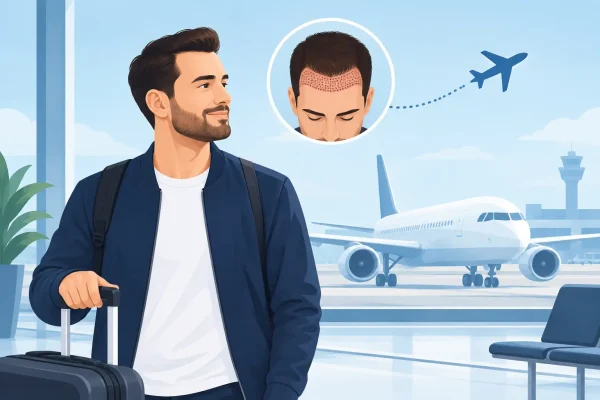
What Should You Pack When Travelling Abroad for a Hair Transplant?
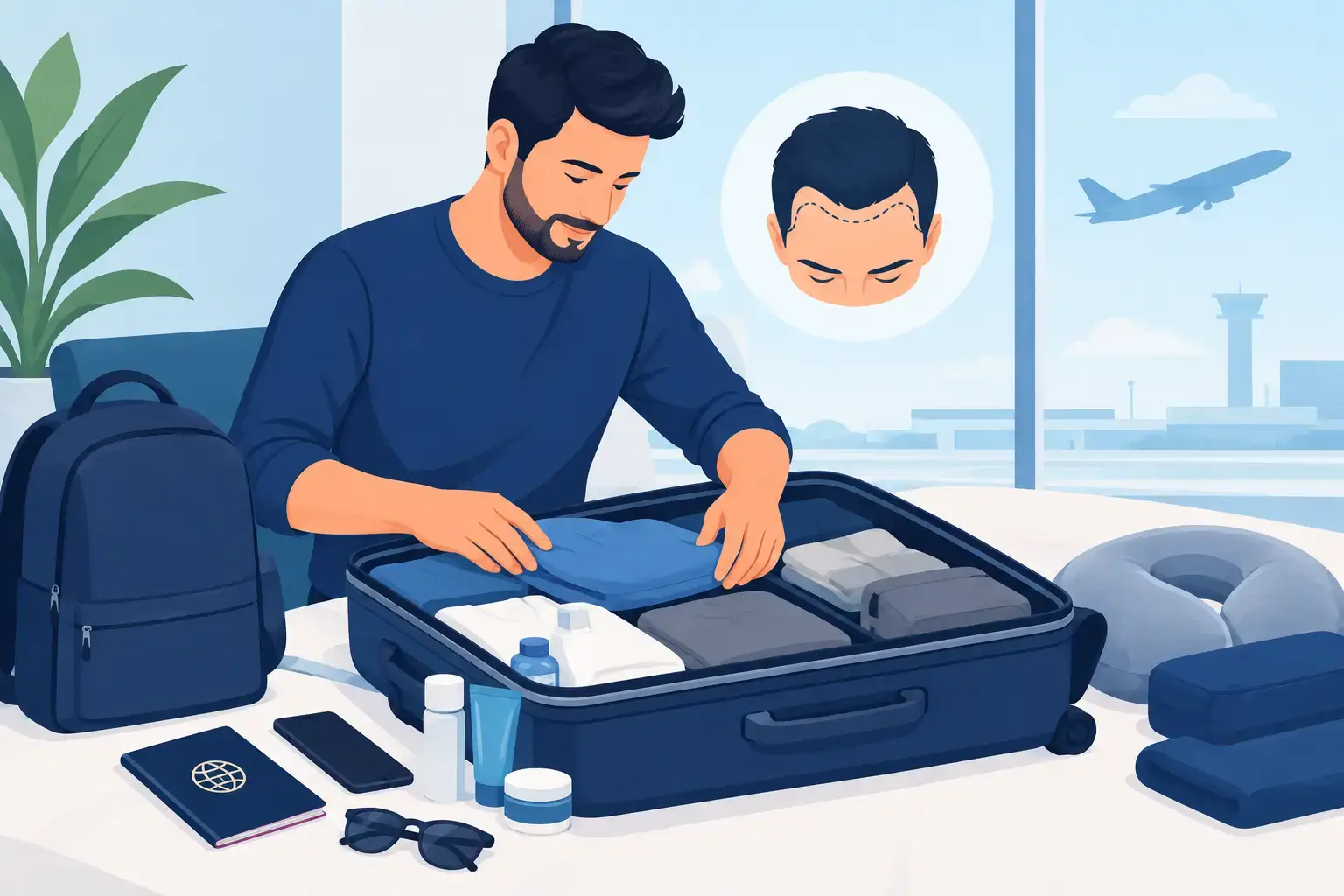
Learn what should you pack when travelling abroad for a hair transplant, from travel documents and loose clothing to recovery essentials and flight comfort
- Start With Your Medical and Travel Documents
- Pack Your Regular Medications Carefully
- Choose Loose, Front-Opening Clothing
- Bring Recovery Essentials in Your Carry-On
In this article9
- Start With Your Medical and Travel Documents
- Pack Your Regular Medications Carefully
- Choose Loose, Front-Opening Clothing
- Dress for Istanbul Weather, Not Just the Procedure
- Bring Recovery Essentials in Your Carry-On
- Plan for Comfortable, Graft-Safe Sleep
- Keep Skincare and Hygiene Simple
- What Not to Pack for Hair Transplant Travel
- Prepare for the Flight Home
Your packing choices can make the first few days after a hair transplant feel calm and manageable rather than unnecessarily stressful. If you are asking what should you pack when travelling abroad for a hair transplant?, focus less on filling a large suitcase and more on protecting your comfort, your grafts, and your travel plan.
A hair transplant is a precise medical procedure, but international patients also need to navigate airports, hotel stays, changing weather, and a return flight. The right items help you follow your surgeon’s aftercare instructions confidently while keeping your recovery discreet and comfortable.
Start With Your Medical and Travel Documents
Keep every essential document in your personal item or carry-on bag, never in checked luggage. Delayed bags are inconvenient for any trip, but they are particularly frustrating when they contain medications, aftercare instructions, or a change of loose clothing needed after treatment.
Bring your passport, visa or travel authorization if required, flight itinerary, hotel details, travel insurance information, and your clinic’s contact details. It is also wise to save digital copies securely on your phone and email account. If you have relevant medical records, allergy information, or a list of regular medications, bring those as well.
Your clinic may provide a personalized treatment schedule, consent documents, and written post-operative guidance. Keep these accessible. If a question arises at the hotel or airport, you should not have to search through your suitcase for the answer.
Pack Your Regular Medications Carefully
Bring enough of your prescribed medication for the entire trip, plus a few extra days in case travel plans change. Keep medication in its original labeled container, particularly when flying internationally. This makes airport screening easier and helps prevent confusion about dosage.
Do not add supplements, pain relievers, blood-thinning medications, or anti-inflammatory products without asking your surgeon first. Some commonly used products can affect bleeding, swelling, or healing. Your surgeon’s instructions take priority over general advice found online.
If you use topical hair-loss treatments or oral medications, ask whether you should pause them before and after the procedure. The answer depends on your treatment plan, medical history, and the technique used.
Choose Loose, Front-Opening Clothing
This is one of the most practical details patients overlook. After a hair transplant, you should avoid pulling tight clothing over your head because it could rub against or disturb newly placed grafts.
Pack button-down shirts, zip-front hoodies, loose cardigans, or front-opening pajamas. Choose soft, breathable fabrics that are comfortable in a hotel room and easy to wear during clinic visits. A loose button-down shirt is often the best option for procedure day and the following mornings.
Avoid tight crewneck sweaters, fitted T-shirts, turtlenecks, and anything that requires you to stretch fabric across your scalp. You may also want a soft, comfortable pair of pants or joggers for the day after treatment, when rest is the priority.
Dress for Istanbul Weather, Not Just the Procedure
Turkey’s weather can vary considerably by season. Pack layers so you can remain comfortable without needing to wear a tight hat or heavy garment that presses on your head. A light jacket, open-front overshirt, and breathable basics are usually more useful than bulky items.
Your clinic will tell you when and how to wear any head covering after surgery. Do not assume that a baseball cap, beanie, or hood is safe immediately after treatment. Grafts are delicate in the earliest healing period, and proper timing matters.
Bring Recovery Essentials in Your Carry-On
Your clinic may provide specialized aftercare products such as shampoo, saline spray, a neck pillow, medication, or a post-operative care kit. Confirm what is included before you fly so you do not buy unnecessary duplicates or miss a required item.
For the journey itself, a small recovery pouch is helpful. Include these essentials:
- A travel neck pillow to help you sleep with your head elevated
- A small, clean towel or pillowcase for the hotel
- Unscented lip balm and moisturizer for dry cabin air
- Tissues, hand sanitizer, and wet wipes
- A refillable water bottle for hydration after airport security
- A phone charger and portable power bank
The neck pillow deserves special attention. Many patients are instructed to sleep with their head elevated for several nights to help manage swelling. A supportive travel pillow can make the hotel stay and flight home substantially more comfortable. It should support your neck without pressing against the transplanted area.
Plan for Comfortable, Graft-Safe Sleep
Hotel pillows are not always ideal for post-operative recovery. In addition to a neck pillow, consider packing a lightweight inflatable wedge or arranging extra pillows with your hotel. Your goal is to rest with your head elevated according to your surgeon’s guidance.
A dark, quiet room can also improve sleep when you are recovering from a procedure and adjusting to a new time zone. Earplugs and an eye mask are useful, provided the mask does not touch or put pressure on the treatment area. If there is any doubt, skip the eye mask for the first nights.
Do not bring anything that could accidentally rub against the grafts while you sleep. This includes rough blankets, overly firm headrests, or bulky sleep accessories that shift when you move.
Keep Skincare and Hygiene Simple
International travel often encourages people to pack their full grooming routine. After a hair transplant, simpler is safer. You will likely need to avoid applying standard styling products, fragranced sprays, hair fibers, dry shampoo, or strong skincare products near the scalp until your surgeon confirms it is appropriate.
Pack a basic toiletry bag with toothpaste, deodorant, gentle facial cleanser, moisturizer, and any approved products you use regularly. If you wear makeup, choose products that are easy to remove without vigorous rubbing. Avoid scheduling other cosmetic treatments during the same trip unless your clinic has specifically approved them.
If you are traveling with a companion, ask them to help check that your shampoo, saline spray, or medication is packed correctly. Having a second person review the essentials can reduce last-minute stress.
What Not to Pack for Hair Transplant Travel
The most useful packing strategy is knowing what to leave behind. Avoid tight hats, high-collared garments, and clothing that must be pulled over your head. Leave alcohol for after your medically advised recovery window, and do not pack or plan to use nicotine products if your surgeon has instructed you to avoid them.
You should also avoid building your itinerary around strenuous exercise, swimming, saunas, steam rooms, or direct sun exposure. Comfortable walking shoes are sensible, but this is not the ideal trip for a demanding sightseeing schedule immediately after surgery.
If you are traveling for an unshaven, female, afro hair, beard, or eyebrow transplant, your post-procedure needs may differ slightly. The packing principle stays the same: protect the treated area, avoid friction, and follow the individualized guidance provided by your medical team.
Prepare for the Flight Home
Before returning home, place all aftercare products, medications, and written instructions in your carry-on. Ask the clinic whether any liquids must be packed in checked luggage because of airport security limits. Do not transfer prescription medication into unmarked containers to save space.
Wear loose, front-opening clothing for the flight and arrive early enough that you are not rushing through the airport. Keep water nearby, avoid resting your head against surfaces that could put pressure on the recipient area, and use your neck pillow if it supports your prescribed sleep position.
At HairNeva, international patient care is built around more than the procedure itself. A clear recovery plan, surgeon-led guidance, and practical travel preparation help protect the natural-looking result you came to Istanbul for.
Pack with the first week of healing in mind, not just the flight. A few thoughtful items, paired with careful adherence to your clinic’s instructions, can help you return home feeling comfortable, prepared, and one step closer to renewed confidence.