Can DHI Create a Natural-Looking Hairline?
Can DHI be used to create a natural-looking hairline? Learn how implantation angle, density, graft selection, and surgeon-led design shape natural results.
- Can DHI Be Used to Create a Natural-Looking Hairline?
- What Makes a Hairline Look Real?
- Why Hairline Design Must Be Personal
- DHI Versus FUE for Hairline Restoration
In this article9
- Can DHI Be Used to Create a Natural-Looking Hairline?
- What Makes a Hairline Look Real?
- Single-Hair Grafts Create a Softer Front Edge
- Direction and Angle Matter at Every Millimeter
- Density Should Build Gradually
- Why Hairline Design Must Be Personal
- DHI Versus FUE for Hairline Restoration
- The Patient Factors That Affect Natural Results
- Questions to Ask Before Choosing DHI
A convincing hair transplant is rarely recognized as a transplant. People see a rested face, a stronger frame around the forehead, and hair that appears to have always grown there. That is why the question, “can DHI be used to create a natural-looking hairline?” matters more than a simple yes or no. DHI can support exceptionally natural hairline work, but the result depends on the aesthetic plan and clinical execution behind the tool.
For patients with recession, thinning at the frontal zone, or a hairline that no longer fits how they feel, the goal should not be a perfectly straight line or maximum density at any cost. It should be a hairline designed for the individual’s facial proportions, age, existing hair pattern, and long-term donor supply.
Can DHI Be Used to Create a Natural-Looking Hairline?
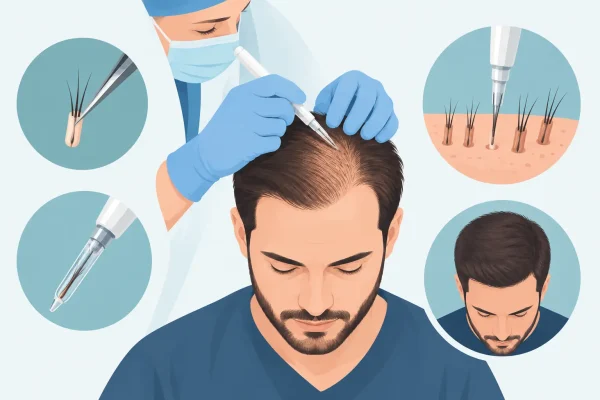
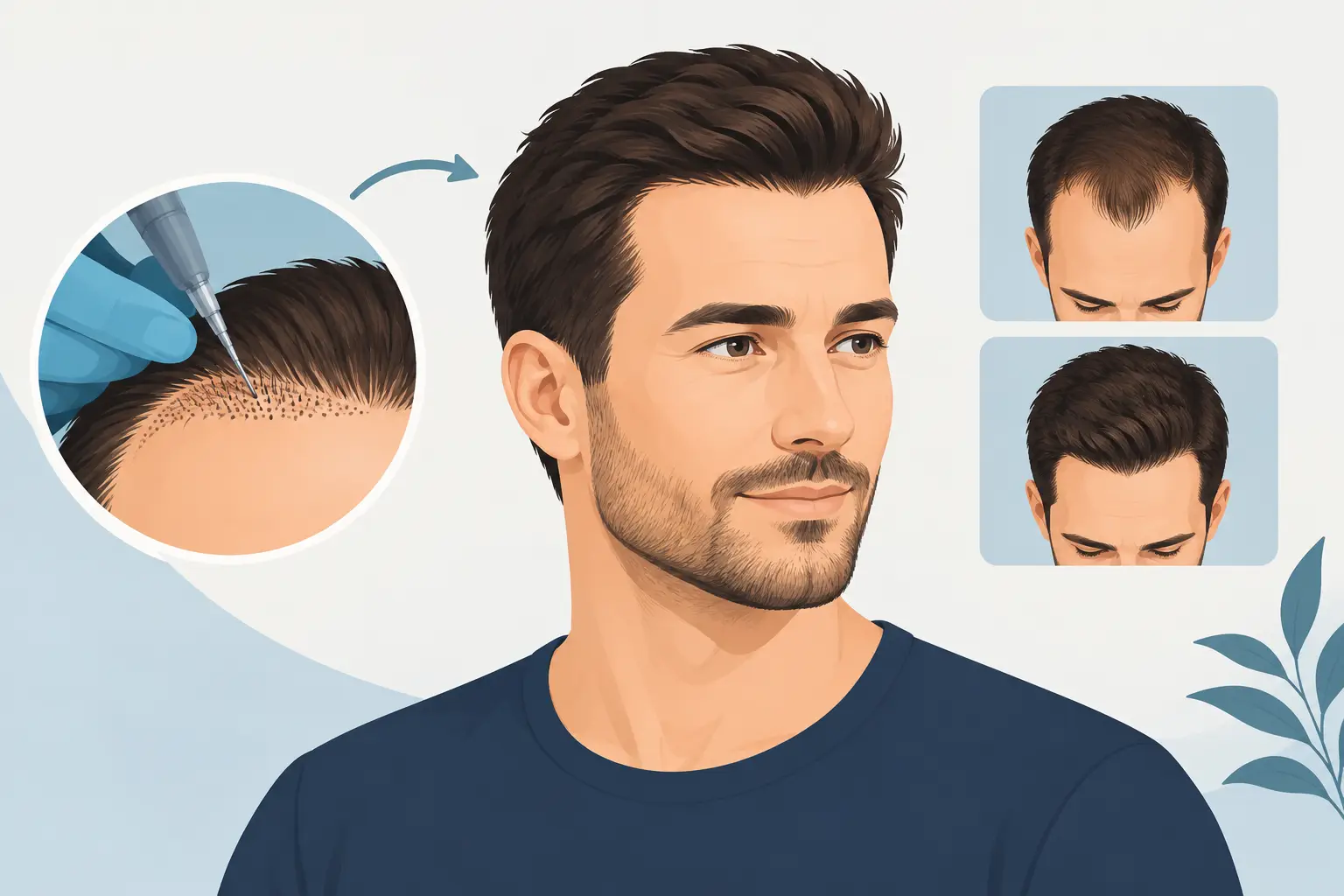
Yes. Direct Hair Implantation, or DHI, can be used to create a highly natural-looking hairline when it is performed by an experienced medical team with careful surgeon-led planning. In DHI, extracted follicular units are placed with a specialized implantation pen. This gives the team controlled placement of grafts within the recipient area, including the frontal hairline where angle, direction, and spacing are especially visible.
The technique is valuable because frontal hairs do not simply point upward. They emerge from the scalp at a low, forward-facing angle, then gradually change direction across the temples and transition zones. A skilled DHI approach allows individual grafts to be positioned to complement those patterns.
Still, DHI is not a shortcut to a natural result. An implantation device cannot compensate for an artificial hairline design, poorly selected grafts, an overly dense front edge, or inadequate donor management. The surgeon’s aesthetic judgment remains the deciding factor.
What Makes a Hairline Look Real?
Natural hairlines are irregular in a controlled way. They have soft transitions, small variations in height, and subtle differences in density that prevent the appearance of a hard, transplanted border. The best results respect this complexity rather than trying to create geometric perfection.
Single-Hair Grafts Create a Softer Front Edge
The first rows of a natural hairline are usually composed of fine, single hairs. For this reason, single-follicular-unit grafts are typically selected for the leading edge. Multi-hair grafts can add useful density behind the hairline, but placing them too far forward may create a plug-like or overly uniform appearance.
Graft caliber matters as much as graft count. Fine hairs are better suited to softening the transition from forehead to hair, while thicker grafts can be reserved for areas farther behind where visual density is needed. This layering is one of the details that separates a believable restoration from an obvious one.
Direction and Angle Matter at Every Millimeter
A natural hairline sits close to the scalp. If grafts are implanted at an upright angle, they can look unnatural, particularly in bright light or when the hair is styled back. DHI supports precise placement, but the clinical team must still understand how hairs should flow from the central forelock into the temporal recessions and side-frontal regions.
The temples require particular restraint. An aggressively filled temple point can make a result look artificial and may not age well. A refined design preserves the natural recession patterns that give a male hairline maturity, while female hairline restoration may call for a different approach based on facial balance and the cause of thinning.
Density Should Build Gradually
A transplanted hairline should not appear as a dark wall of hair at the front. Natural density usually increases gradually from the soft leading edge to the stronger frontal zone behind it. This is sometimes called a transition zone, and it is essential to visual realism.
DHI can be effective for building this gradient because grafts can be placed selectively across the hairline and frontal scalp. However, the appropriate density depends on donor capacity, hair shaft thickness, curl pattern, contrast between hair and scalp, and the patient’s native hair. More grafts are not automatically better. The right distribution often produces a fuller-looking result with less risk to the donor area.
Why Hairline Design Must Be Personal
A low teenage hairline may look appealing in a photo, but it is not always the safest or most sustainable choice for an adult experiencing progressive hair loss. Hair loss can continue behind a newly transplanted front edge. If the hairline is placed too low or too flat, future thinning may leave an isolated band of transplanted hair that requires additional procedures to correct.
A responsible consultation considers the patient’s age, family history, current pattern of loss, future risk, scalp characteristics, and available donor grafts. The shape should also suit the face. A hairline that works beautifully for one patient can look out of place on another because forehead height, brow position, facial width, and temple structure differ.
For women, the design process may focus less on lowering the hairline and more on restoring density around a widened part, frontal thinning, or traction-related loss. For patients with Afro-textured hair, curl pattern can create excellent visual coverage, but extraction and placement require specific experience to protect naturally curved follicles. The method should always follow the patient’s anatomy, not a one-size-fits-all template.
DHI Versus FUE for Hairline Restoration
DHI and FUE are often discussed as competing techniques, but they are closely related in modern hair transplantation. Follicular units are generally harvested through FUE extraction. The distinction is often in how the grafts are implanted: DHI uses an implantation pen, while conventional FUE implantation may involve recipient-site creation followed by graft placement with forceps or implanters.
For delicate frontal work, DHI may offer advantages in controlled graft placement and can be particularly useful when working between existing hairs. Some patients also appreciate that DHI can reduce the need for extensive shaving in selected cases. Yet a well-performed Sapphire FUE or conventional FUE hairline can also look entirely natural in expert hands.
The better question is not which label is superior. It is which approach gives the physician and clinical team the most appropriate control for your hairline, donor area, existing density, and desired result. Technique selection should follow diagnosis and design, not marketing claims.
The Patient Factors That Affect Natural Results
Even excellent implantation cannot create the same outcome for every patient. Donor hair quality is central. Thick, wavy hair with low contrast against the scalp often creates stronger visual coverage than very fine, straight hair with high scalp contrast. That does not mean patients with fine hair cannot achieve a natural result. It means expectations, hairline placement, and graft allocation must be adjusted intelligently.
Existing hair also changes the plan. When native hair remains around the frontal zone, grafts need to be placed carefully to blend without causing unnecessary trauma. If active hair loss is progressing, medical management may be recommended to help preserve the surrounding native hair and protect the long-term appearance of the transplant.
Healing and growth require patience. Transplanted hairs commonly shed during the early weeks before entering a new growth cycle. Visible growth often begins gradually after several months, with maturation continuing for up to 12 months or longer. The final hairline should be evaluated after it has had time to thicken, soften, and integrate with the surrounding hair.
Questions to Ask Before Choosing DHI
A premium hair restoration consultation should go beyond a graft number and a price quote. Ask who will design the hairline, who will perform the critical extraction and implantation steps, and how the clinic plans for future hair loss. Request to see healed results with similar hair characteristics and a similar degree of recession, not only immediate post-procedure photos.
You should also ask how the clinic selects single-hair grafts for the front, how it protects donor reserves, and whether your current loss pattern is stable enough for surgery. Clear answers are a sign of a thoughtful medical plan. Pressure to create an unrealistically low hairline is not.
At HairNeva, hairline restoration is approached as both a surgical and aesthetic decision, supported by physician-led assessment and personalized planning. The objective is not to make every patient look younger overnight. It is to create a result that looks credible in daily life, photographs naturally, and remains appropriate as the patient ages.
A natural-looking hairline begins with an honest plan: preserve what can be preserved, use donor grafts carefully, and choose a shape that will still look like it belongs to you years from now.