Can Exosome Therapy Support Hair Follicle Health?

Can exosome therapy support hair follicle health? Learn who may benefit, what research shows, and how physician-led care guides safer choices.
- What Is Exosome Therapy for Hair?
- Can Exosome Therapy Support Hair Follicle Health?
- Who May Be a Candidate?
- Why Diagnosis Comes Before Regenerative Treatment
In this article7
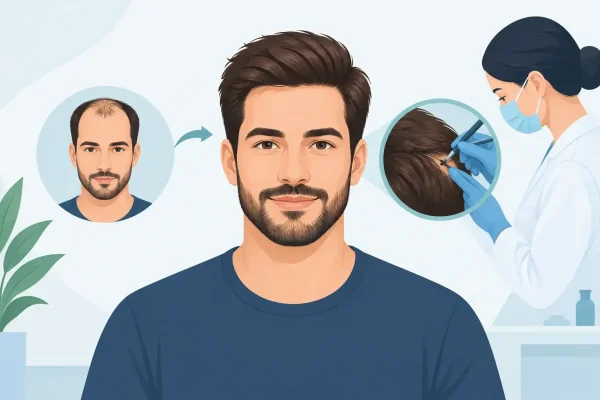
A thinning crown, widening part, or increasingly visible hairline can change how you approach mirrors, photos, and professional life. So, can exosome therapy support hair follicle health? It may have a role as a regenerative adjunct for selected patients, but it is not a proven replacement for a properly planned hair loss diagnosis, medical treatment, or hair transplant.
For patients seeking natural-looking density, the right question is not whether exosomes are a miracle solution. It is whether this treatment is appropriate for the cause, stage, and pattern of your hair loss – and whether it is delivered within a physician-led plan designed for your long-term goals.
What Is Exosome Therapy for Hair?
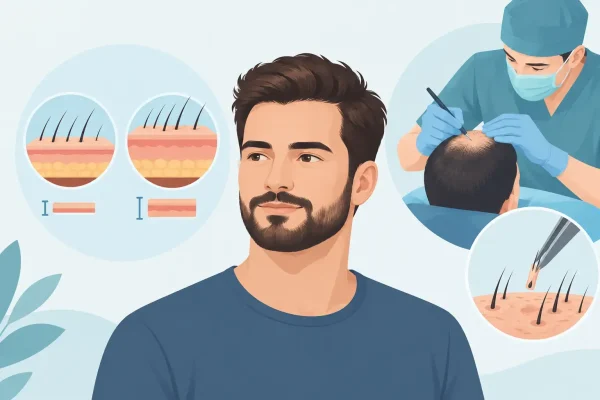
Exosomes are extremely small particles released by cells. They carry biological signals such as proteins, lipids, and genetic material that cells may use to communicate with one another. In regenerative medicine, researchers are studying whether these signals can influence inflammation, wound healing, and tissue repair.
In hair restoration, exosome-based treatments are generally discussed as a way to create a more supportive environment around weakened follicles. The aim is not to create brand-new follicles where none exist. Rather, the proposed goal is to support existing, miniaturized follicles that may still have the capacity to produce stronger, thicker hair.
This distinction matters. A follicle that is dormant or producing fine hairs may respond differently from an area that has been bald for years. When follicles are no longer viable, regenerative therapies alone cannot reliably restore meaningful density. In those cases, hair transplantation may be the more predictable path to visible coverage.
Can Exosome Therapy Support Hair Follicle Health?
The science behind exosomes is promising, but still developing. Laboratory and early clinical research suggests that cell-signaling factors may influence pathways involved in follicle cycling, local inflammation, and scalp tissue quality. These mechanisms are relevant because hair loss is rarely just a cosmetic concern. It often involves progressive follicle miniaturization, reduced growth-phase activity, hormonal sensitivity, inflammation, or a combination of these factors.
That said, promising biology is not the same as guaranteed clinical results. Exosome therapy is not a standardized treatment with one universally accepted formula, dosage, preparation method, or treatment schedule. Product source, processing, storage, delivery technique, and patient selection can all affect the experience and the potential outcome.
For this reason, patients should be cautious about clinics that promise permanent regrowth, dramatic density in every case, or results equivalent to surgery without a careful examination. Responsible regenerative care begins with clear expectations. Some patients may notice improved hair quality, reduced shedding, or better caliber in existing hairs over time. Others may see limited change, particularly when hair loss is advanced or actively progressing.
Who May Be a Candidate?
Exosome therapy may be considered for men and women with early to moderate thinning who still have active follicles in the treatment area. It can be especially relevant for patients who want to support hair quality before considering surgery, those aiming to complement a broader non-surgical hair care plan, or individuals interested in supporting scalp recovery after a hair transplant.
Women with diffuse thinning may benefit from a detailed assessment because the cause is not always genetic pattern hair loss. Hormonal changes, low iron, thyroid conditions, nutritional issues, stress-related shedding, traction, and inflammatory scalp conditions can all affect density. Treating the visible symptom without identifying the cause may delay the care that truly matters.
Men with a receding hairline or crown thinning also need a realistic evaluation of donor supply, future hair loss pattern, and family history. If the hair loss is progressing quickly, a physician may recommend stabilizing the condition before designing a transplant. A well-timed regenerative treatment can be part of that strategy, but it should not create false confidence that future loss has been permanently stopped.
Why Diagnosis Comes Before Regenerative Treatment
A premium hair restoration plan is built on precision, not assumptions. Before recommending any treatment, a qualified physician should assess the scalp, hair shaft caliber, density distribution, donor area, medical history, and pattern of loss. Advanced imaging and AI-supported hair analysis can help document baseline density and identify subtle changes that are difficult to judge with the eye alone.
This evaluation helps answer practical questions: Are the follicles still present? Is shedding temporary or progressive? Is there inflammation or scarring? Would the patient benefit more from medical management, mesotherapy, laser-supported care, a transplant, or a combination approach?
For international patients traveling to Istanbul, this assessment is equally important before booking travel. High-quality clinics should request clear photos, review your history, and explain what can realistically be achieved. A treatment plan should protect both your appearance and your donor reserves, rather than focus only on a short-term cosmetic promise.
Exosome Therapy and Hair Transplant Results
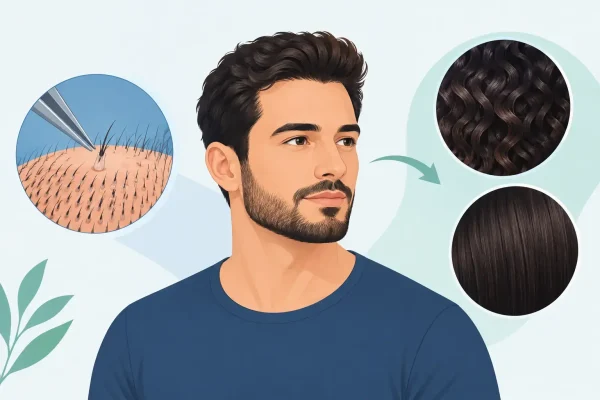
Hair transplantation remains the most established solution for restoring hair in areas where follicles have been permanently lost. Techniques such as FUE, Sapphire FUE, and DHI allow surgeons to redistribute genetically resistant donor hairs into thinning or bald areas with careful control over angle, direction, and density.
Exosome therapy may be positioned as supportive care around transplantation, depending on the physician’s assessment and local clinical protocols. The intended role may be to support scalp quality and the recovery environment, not to replace graft placement or guarantee graft survival. A transplant’s result still depends on surgical planning, graft handling, recipient-site design, post-procedure care, and the patient’s individual healing response.
Patients should be particularly wary of claims that a regenerative injection can deliver the same density as thousands of transplanted grafts. It cannot replicate the physical redistribution of follicles. However, when used thoughtfully, regenerative care may complement a broader strategy for protecting native hair and maintaining a fuller overall appearance.
Safety, Regulation, and Questions Worth Asking
Exosome products and protocols vary significantly. In the United States, there are currently no FDA-approved exosome products for treating hair loss. That does not mean all research lacks value, but it does mean patients should approach marketing claims with appropriate scrutiny.
A reputable clinic should be able to explain the treatment’s intended purpose, the nature of the product used, the proposed number of sessions, potential side effects, and the limits of available evidence. You should also disclose medications, allergies, autoimmune conditions, active infections, pregnancy status, and any history of scalp disease before proceeding.
Common treatment-related concerns can include temporary tenderness, redness, swelling, or bruising at injection sites. More serious risks may depend on product quality, sterility, administration technique, and individual health factors. Physician oversight is not a luxury in this setting. It is a central part of responsible patient care.
What Results Should You Expect?
Hair growth moves slowly. Even when a treatment is appropriate, changes in shedding or hair quality may take months to evaluate. A clinic that offers immediate, dramatic before-and-after promises is not setting the right standard.
The most meaningful measure is often not a single photograph but a series of consistent assessments over time. Standardized photos, scalp analysis, and physician follow-up can reveal whether native hair is stabilizing, whether caliber is improving, and whether your plan needs adjustment. For some patients, the best result is preserving existing density long enough to delay surgery. For others, the goal is to optimize the scalp before a carefully designed transplant.
At HairNeva, hair restoration planning is centered on individualized diagnosis, aesthetic precision, and physician-led recommendations. The objective is always a result that looks believable in real life – from the front hairline to the crown, and from close conversation to high-resolution photos.
If you are considering exosome therapy, begin with a consultation that gives you honest answers about your follicles, not just hopeful language about a treatment. The most confidence-restoring choice is the one that fits your biology, protects your future options, and moves you toward natural-looking hair with a plan you can trust.