Can Transplanted Hair Change Its Natural Texture?
Can transplanted hair change its natural texture? Learn why regrowth may look different, what settles over time, and when to seek expert advice.
- Why transplanted hair may look or feel different
- Can transplanted hair permanently change its natural texture?
- Texture, curl pattern, and graft placement
- What supports healthier-looking regrowth
In this article6
A newly transplanted hairline can look promising one month and unexpectedly wavy, coarse, fine, or uneven a few months later. That can be unsettling when you chose surgery for a natural-looking result. So, can transplanted hair change its natural texture? It can appear to, especially during early regrowth, but permanent, dramatic texture changes are less common than many patients fear.
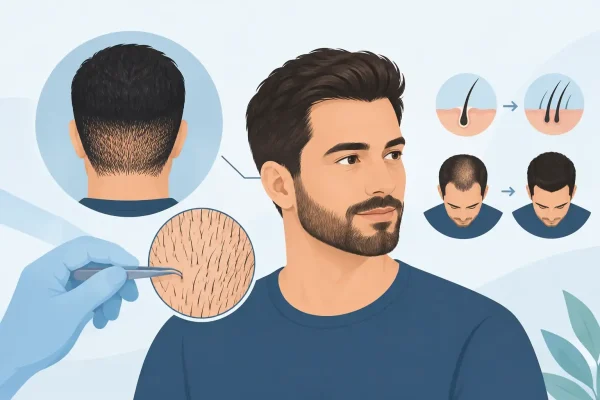
In most cases, transplanted follicles continue to express the characteristics of their donor area. Hair taken from the back and sides of the scalp is generally more resistant to genetic hair loss and tends to retain its basic thickness, color, and curl pattern after it is moved. Still, the healing process, the hair growth cycle, and individual biology can make newly growing hairs look different for a while.
Why transplanted hair may look or feel different
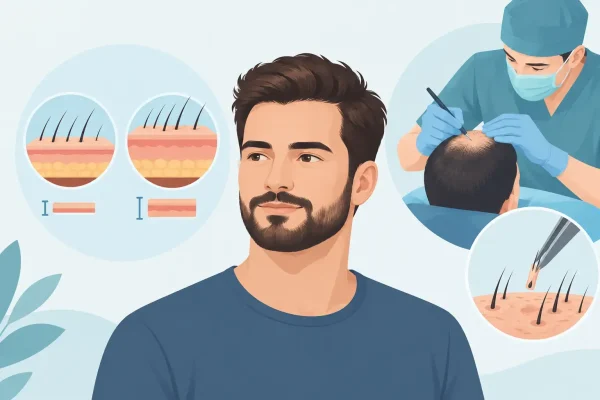
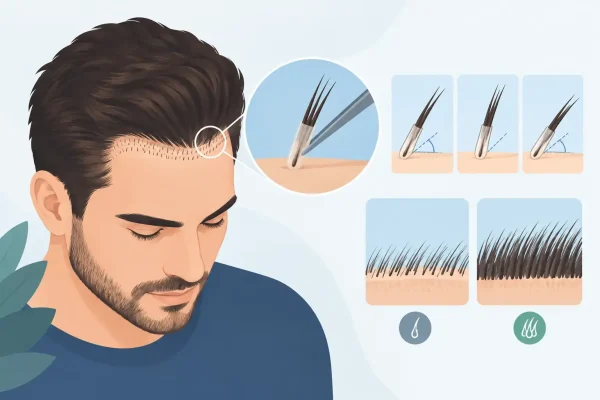
A hair transplant relocates living follicular units, not finished hair shafts. During FUE, Sapphire FUE, or DHI transplantation, each graft is carefully extracted, preserved, and implanted into recipient sites designed for natural direction and density. The follicle needs time to establish its blood supply and return to a normal growth rhythm.
That adjustment period can affect the appearance of the first hairs that emerge. Early transplanted growth may be finer, wirier, curlier, or more irregular than the surrounding hair. Some patients notice a temporary “kink” in individual strands. Others feel that their transplanted hair is initially drier or more difficult to style.
This does not necessarily mean the grafts have changed their inherent identity. More often, it reflects a follicle recovering from surgical handling and cycling back into active growth. The new shaft may also emerge through healing skin with a slightly different angle or may be influenced by temporary dryness, scalp inflammation, or product buildup.
The first growth cycle is not the final result
After transplantation, the visible hairs within the grafts commonly shed. This is expected shock shedding, and it does not mean the follicles have been lost. The follicles remain under the skin and enter a resting phase before beginning new growth.
New hairs often start appearing around three to four months after surgery. At this point, they may not resemble your mature result. Density is still developing, hairs may grow at different speeds, and texture can be inconsistent from one graft to another. Most patients see more meaningful improvement between six and nine months, while texture, caliber, and overall blend can continue to mature for 12 months or longer. Crown procedures can take even more time to show their full visual effect.
For this reason, judging texture at four or five months can create unnecessary concern. A specialist should evaluate the transplant, but time is often part of the treatment plan.
Can transplanted hair permanently change its natural texture?
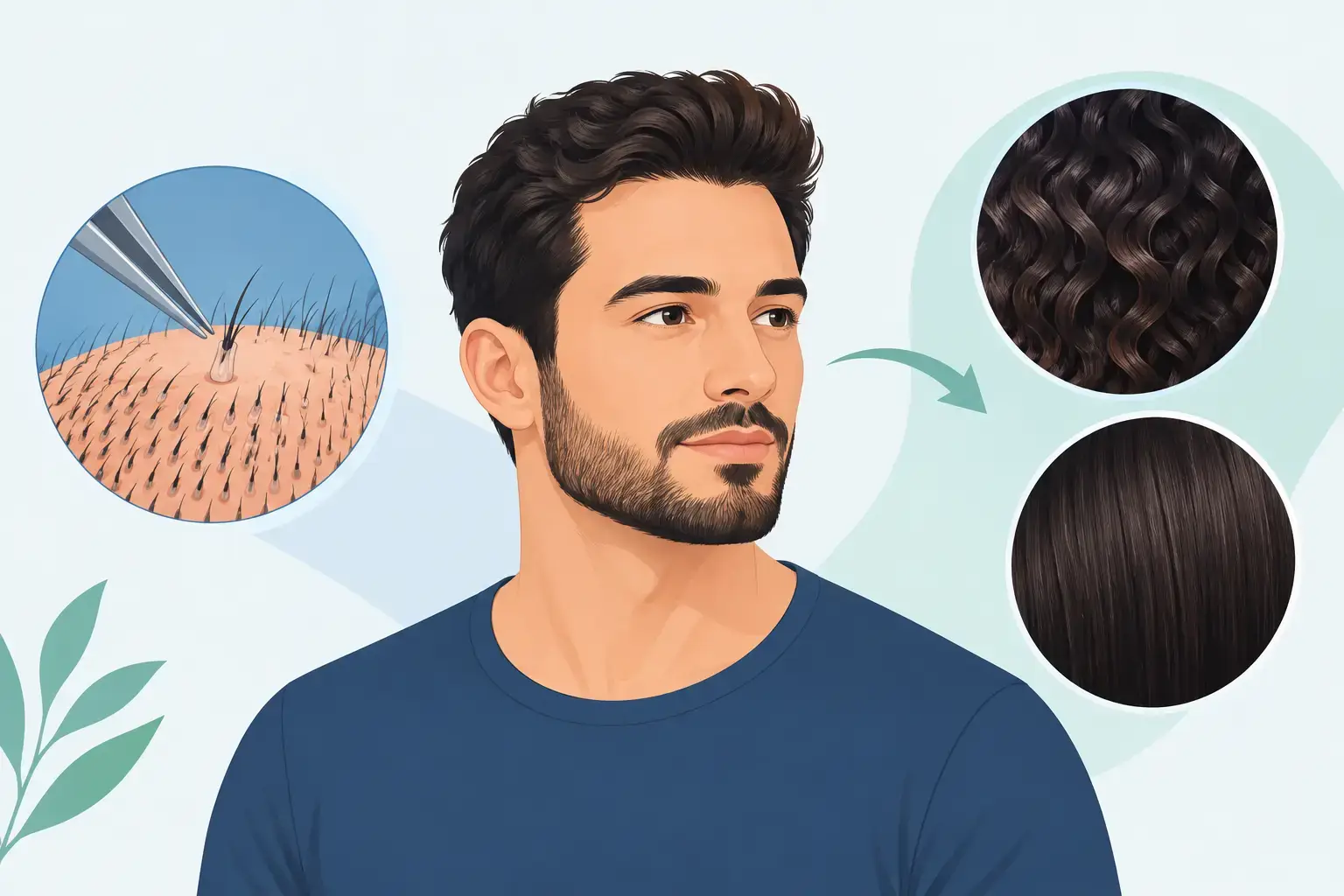
The short answer is: sometimes, but usually not in the way patients imagine. Transplanted hair generally retains donor-area traits, which is why donor assessment matters so much. A surgeon selects follicles not only for survival but also for how well their thickness, curl pattern, and color will integrate with the recipient area.
However, hair is biologically complex. The recipient scalp has its own blood flow, skin characteristics, sebum production, and exposure to inflammation. In a minority of cases, these factors may contribute to subtle, lasting differences in how transplanted hairs behave. A person with naturally straight donor hair, for example, may see a small degree of wave in some newly transplanted hairs, particularly early on.
There are also non-surgical reasons texture can change over time. Aging, hormonal shifts, thyroid conditions, nutritional deficiencies, medications, heat styling, coloring, and scalp disorders can alter the appearance of both native and transplanted hair. If texture changes are happening across the scalp rather than only in the transplanted zone, the cause may not be the procedure itself.
The key distinction is between a temporary irregular growth phase and a persistent concern that deserves medical evaluation. A properly planned, physician-led procedure aims for transplanted hair that ultimately blends with your existing pattern rather than calling attention to itself.
Texture, curl pattern, and graft placement
Texture is only one part of a natural result. The direction, angle, and distribution of each implanted graft matter just as much. Even hair with a matching curl pattern can look artificial if it is placed too upright, too densely in the wrong zone, or without respect for the natural flow of the hairline and temples.
This is especially relevant for curly and Afro-textured hair. Curved follicles require specialized extraction planning because the shape beneath the skin may not match the visible direction of the shaft. Graft handling, incision angle, and the surgeon’s experience with textured hair can affect both survival and the way the final result lays against the scalp.
For women, long-hair and unshaven procedures may also require careful planning around existing density and part-line visibility. In every case, the goal should be aesthetic continuity: a restored area that looks like it belongs to you in professional settings, close-up photographs, and everyday styling.
What supports healthier-looking regrowth
Your aftercare cannot rewrite a follicle’s genetic texture, but it can protect healing grafts and reduce avoidable scalp stress. Follow the washing instructions provided by your clinic, avoid scratching or picking during the early healing period, and protect the scalp from direct sun exposure as advised.
Once your surgeon confirms it is safe, gentle hair care can make a visible difference. Avoid aggressive brushing, harsh chemical treatments, frequent high-heat styling, and tightly pulled hairstyles while the transplanted area is maturing. If you use topical hair-loss treatments or take prescription medication for ongoing hair loss, continue only under your physician’s guidance.
Nutrition and general health matter, too. Low iron, inadequate protein intake, vitamin deficiencies, and unmanaged hormonal conditions can affect hair quality and shedding. A hair transplant restores selected follicles; it does not prevent every future change in the hair or scalp.
When to contact your hair transplant specialist
Temporary texture variation is common. Persistent scalp symptoms are not something to ignore. Contact your clinic if you develop increasing redness, pain, warmth, drainage, severe itching, widespread scaling, or sudden patchy loss after the initial recovery period.
It is also worth requesting a review if transplanted hairs remain noticeably coarse, tightly curled, sparse, or poorly aligned after the expected maturation window. High-resolution scalp analysis can help distinguish normal variation from ongoing inflammation, native-hair thinning, or a condition affecting hair shafts.
At HairNeva, treatment planning considers donor quality, hair caliber, curl pattern, scalp characteristics, and the aesthetic design of the recipient area before surgery. That level of assessment is particularly valuable for international patients who want a clear understanding of what is realistic before traveling for treatment.
A transplant should not be judged by the first few uncertain hairs that emerge. Give the follicles time to complete their growth cycle, protect the scalp while it heals, and stay connected with your medical team. The most reassuring result is not hair that looks newly transplanted – it is hair that gradually looks, feels, and moves like your own.