Does Scalp Thickness Affect Hair Transplant Results?
Does scalp thickness affect hair transplant results? Learn how scalp anatomy, donor planning, and surgical technique shape density, healing, and growth.
- How Scalp Thickness Affects Hair Transplant Results
- Why the Donor Area Matters Most
- Recipient-Site Placement: Depth Creates the Difference
- Other Factors That Can Matter More Than Scalp Thickness
In this article9
- How Scalp Thickness Affects Hair Transplant Results
- Thickness Is Not the Same as Hair Density
- Why the Donor Area Matters Most
- Recipient-Site Placement: Depth Creates the Difference
- The Hairline Requires Aesthetic Judgment
- Other Factors That Can Matter More Than Scalp Thickness
- Can a Thin Scalp Still Produce Excellent Results?
- Questions to Ask During Your Consultation
- The Right Plan Is More Valuable Than a Generic Graft Count
A hair transplant can look impressively natural or visibly underwhelming even when the same number of grafts are transplanted. One reason is the tissue beneath the hair: the scalp. So, does scalp thickness affect hair transplant results? Yes, but not in the simplistic sense that a thick scalp guarantees success or a thin scalp rules it out. Scalp thickness is one of several anatomical factors a skilled surgeon evaluates when designing a safe, natural-looking restoration.
For patients traveling for treatment, this distinction matters. Your scalp anatomy influences donor harvesting, graft placement, healing, and the visual density that can be created. It should shape the surgical plan, not create unnecessary concern about whether you are a candidate.
How Scalp Thickness Affects Hair Transplant Results
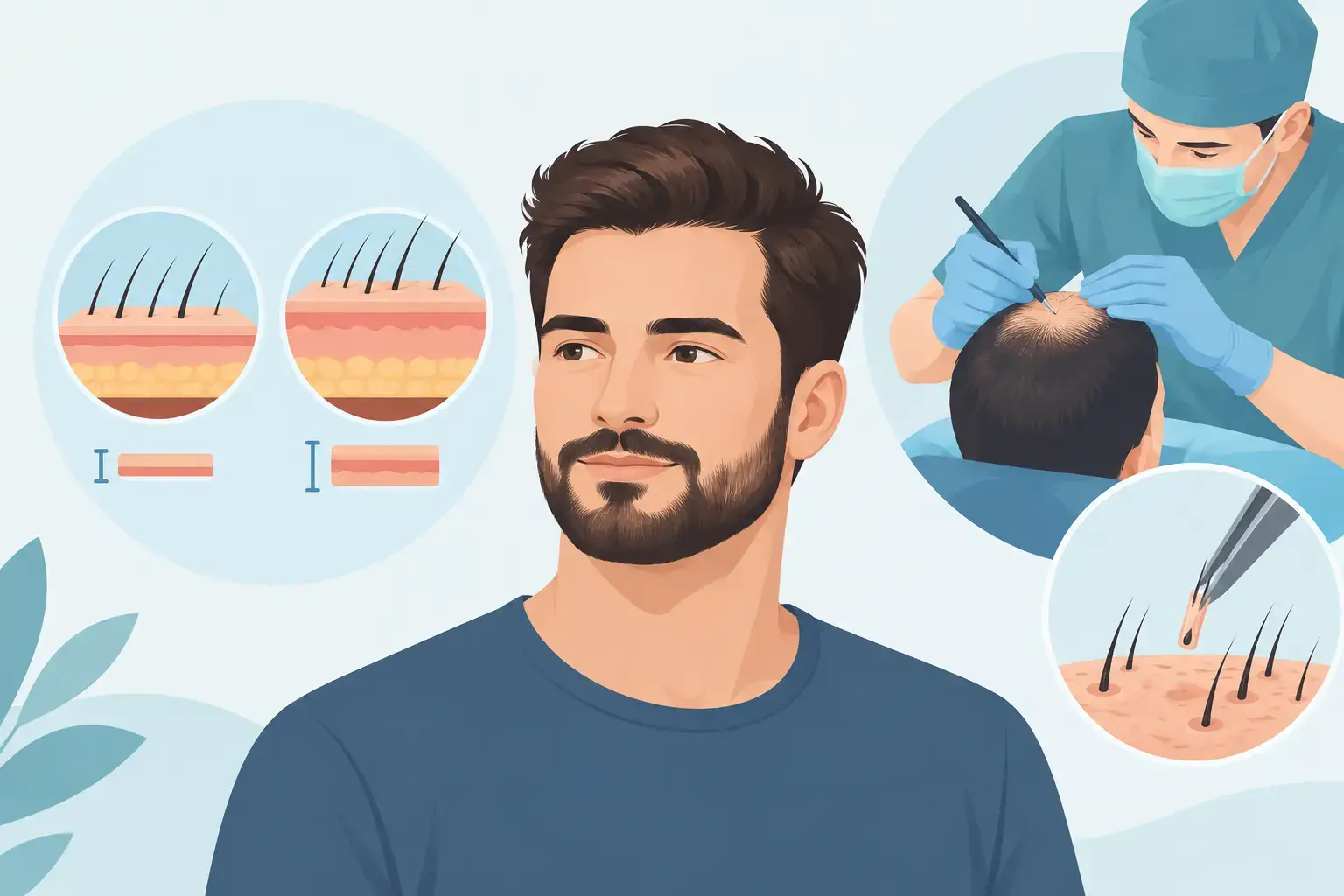
The scalp has several layers, including skin, fatty tissue, connective tissue, and the vascular structures that supply follicles. Thickness varies naturally across the donor area, hairline, temples, mid-scalp, and crown. It can also vary from one patient to another based on genetics, age, prior procedures, skin quality, and certain medical conditions.
A thicker scalp may provide more room for controlled recipient-site creation and graft placement. In some cases, it can make it easier to place follicles at the correct depth while preserving the blood supply needed for healing. A thinner scalp can require more delicate angle and depth control because the surgeon is working closer to underlying tissue and must avoid trauma to existing follicles.
Neither situation is automatically better. The strongest results come from matching the technique to the patient. A surgeon who understands your scalp characteristics can adjust punch selection, implantation depth, incision angle, graft distribution, and the overall density target.
Thickness Is Not the Same as Hair Density
Patients sometimes assume a thick scalp means thick hair, but these are separate characteristics. Hair density refers to how many follicular units are present in a given area. Hair caliber refers to the diameter of each individual hair shaft. Scalp thickness refers to the depth and quality of the tissue supporting those follicles.
A patient can have a relatively thin scalp with excellent donor density and coarse hair, creating very favorable coverage potential. Another patient may have thicker scalp tissue but finer hair and limited donor reserves. That is why a meaningful hair transplant evaluation goes beyond a quick look at the hairline.
Why the Donor Area Matters Most
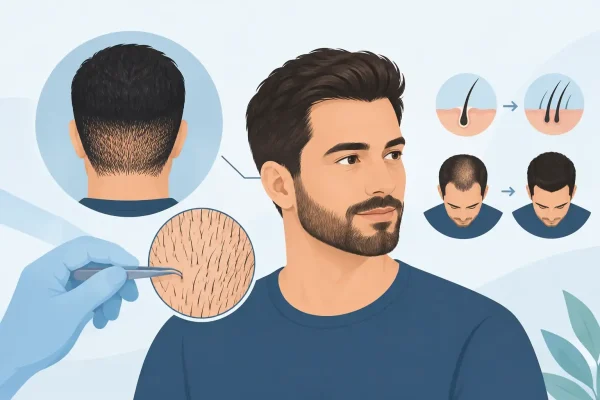
For FUE, Sapphire FUE, and DHI procedures, donor grafts are usually harvested from the back and sides of the scalp. This area must be assessed carefully for follicular density, skin laxity, scalp texture, previous scarring, and the safe number of grafts available for extraction.
When donor-area tissue is thin, extraction must be particularly precise. The punch must follow the natural path of each follicle beneath the skin to reduce the risk of transection, which occurs when a follicle is damaged during removal. The surgeon or physician-led team may choose a smaller punch size, adapt the extraction angle, or reduce the number of grafts taken in a single session to protect the donor area’s appearance.
With thicker or firmer tissue, the technical challenge may be different. The follicles may sit at deeper or more variable angles, and the team must account for the resistance of the tissue during extraction. Proper planning prevents overharvesting and protects the even, natural appearance of the donor zone after recovery.
The goal is never simply to extract the highest possible graft count. The goal is to preserve donor resources while creating enough strategic coverage for a convincing long-term result.
Recipient-Site Placement: Depth Creates the Difference
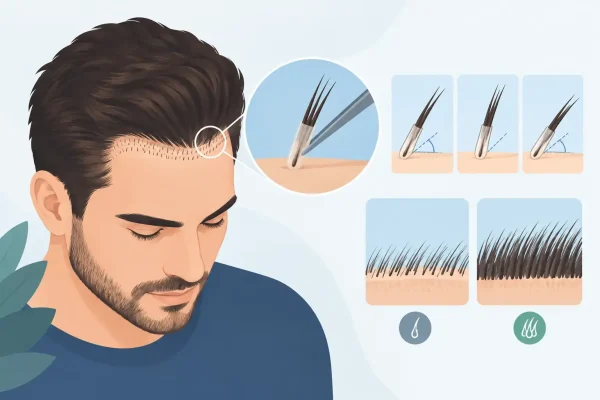
The recipient area is where scalp thickness can have a visible impact. Each graft needs to be implanted at an appropriate depth and angle so it receives blood supply, grows normally, and lies in the same direction as surrounding hair.
If recipient sites are made too shallow, grafts may sit too high, heal poorly, or produce an uneven texture. If they are made too deep, grafts can be buried, and growth may be compromised. Thin scalp tissue gives the surgeon a narrower margin for error. It demands careful control, especially around a refined frontal hairline, temple points, or areas with existing native hair.
This is also why natural-looking density is not created by crowding the maximum number of grafts into every square centimeter. The scalp needs adequate circulation to support healing. Excessively dense packing can be inappropriate for some patients, particularly where tissue quality or scalp vascularity is limited. A well-planned transplant balances density with graft survival and the health of the native hair.
The Hairline Requires Aesthetic Judgment
Scalp thickness has practical consequences, but it does not design a hairline. A natural result still depends on artistic planning: age-appropriate positioning, irregularity that mimics nature, fine single-hair grafts at the leading edge, and a gradual transition into denser zones behind it.
For women with diffuse thinning, the priority may be to preserve existing hair while enhancing density through the part line and frontal region. For men with advanced recession, grafts may need to be allocated carefully between the hairline, mid-scalp, and crown. For patients seeking unshaven hair transplant options, the same anatomical assessment supports discreet placement while protecting surrounding hair.
Other Factors That Can Matter More Than Scalp Thickness
Scalp thickness is relevant, but it is only one part of the decision. During a comprehensive consultation, a qualified hair restoration physician should also assess:
- Donor density and the number of grafts that can be safely harvested
- Hair caliber, curl pattern, and contrast between hair and scalp color
- The progression and likely future pattern of hair loss
- Existing miniaturized hair in the recipient area
- Scalp flexibility, scarring, inflammation, and healing history
- Your medical history, medications, and expectations for coverage
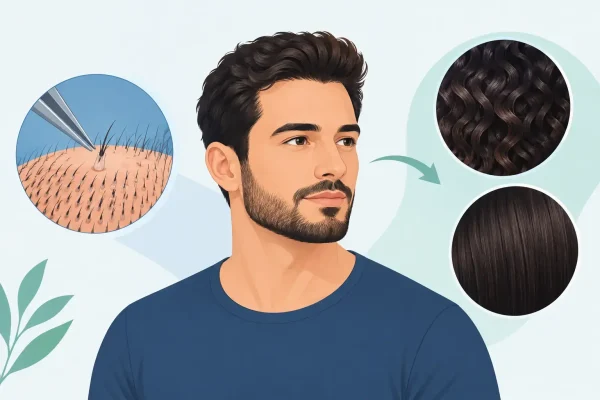
Hair characteristics can substantially change the cosmetic outcome. Coarse, wavy, or curly hair often provides more visual coverage than very fine, straight hair because each shaft creates more volume. Low contrast between hair and scalp can also make moderate density look fuller. Conversely, fine hair with high scalp contrast may require a more conservative design and thoughtful use of grafts.
Advanced assessment tools can help turn these details into a more precise plan. At HairNeva, AI-supported HairMetrix analysis can assist with measuring hair and scalp characteristics, giving the medical team a clearer basis for donor planning and treatment recommendations.
Can a Thin Scalp Still Produce Excellent Results?
Absolutely. A thin scalp does not mean you cannot have a successful transplant. It means your procedure should be personalized rather than standardized. The surgical team may use more conservative recipient-site creation, adjust graft placement, prioritize high-impact zones, and stage treatment when necessary.
Patients with a thin scalp may also benefit from medical or regenerative support when clinically appropriate. Options such as physician-guided medical therapy, mesotherapy, laser-supported hair care, or regenerative treatments may be considered to support existing hair quality. These treatments do not replace transplanted grafts, and they are not right for everyone, but they can be useful within a broader plan for managing progressive hair loss.
The same principle applies to thicker scalp tissue. A patient may have excellent tissue quality yet still need a conservative graft strategy if the donor area is limited or future hair loss is likely. A responsible clinic plans for the years ahead, not only for the first six months of visible growth.
Questions to Ask During Your Consultation
A trustworthy consultation should give you clear answers, not just an attractive graft number. Ask how your donor density and scalp quality were evaluated, whether your scalp anatomy changes the recommended technique, and how many grafts can be extracted without compromising the donor area.
You should also ask where the grafts will be placed first and why. A surgeon who can explain the trade-off between immediate density, future hair loss, and donor preservation is more likely to be designing a result that remains believable over time.
Share any history of scalp surgery, trauma, skin conditions, poor wound healing, or prior transplants. These details may affect tissue quality and should be considered before a treatment plan is finalized.
The Right Plan Is More Valuable Than a Generic Graft Count
Scalp thickness affects technique, but it should never be treated as a single verdict on your potential result. The right hair transplant is built around the full picture: the quality of your donor supply, the behavior of your hair loss, the character of your hair, the health of your scalp, and the aesthetic outcome you want to see in the mirror.
A physician-led assessment replaces guesswork with a plan that respects your anatomy and protects your long-term options. The most rewarding outcome is not the one with the largest number on paper. It is the one that restores confidence with a hairline, density pattern, and donor area that continue to look naturally yours.