Is Hair Transplant Painful? What to Expect Before and After

Is hair transplant painful? Learn what local anesthesia feels like, what to expect during recovery, and how an expert plan often keeps discomfort manageable.
- Is Hair Transplant Painful During the Procedure?
- What Does the Numbing Injection Feel Like?
- Is a Hair Transplant Painful After Surgery?
- How to Make Hair Transplant Recovery More Comfortable
In this article8
- Is Hair Transplant Painful During the Procedure?
- Why technique and planning affect comfort
- What Does the Numbing Injection Feel Like?
- Is a Hair Transplant Painful After Surgery?
- The first week: what usually feels different
- How to Make Hair Transplant Recovery More Comfortable
- When Pain Could Signal That You Need Medical Advice
- The Bigger Concern Is Often Anxiety, Not Pain
A hair transplant should not feel like a procedure you have to endure in silence. For most patients, the defining sensation is not pain during surgery, but the brief sting of anesthesia at the beginning and mild tenderness during the first few days of healing. With a skilled medical team, thoughtful planning, and clear aftercare, the experience is typically far more manageable than many people expect.
Is Hair Transplant Painful During the Procedure?
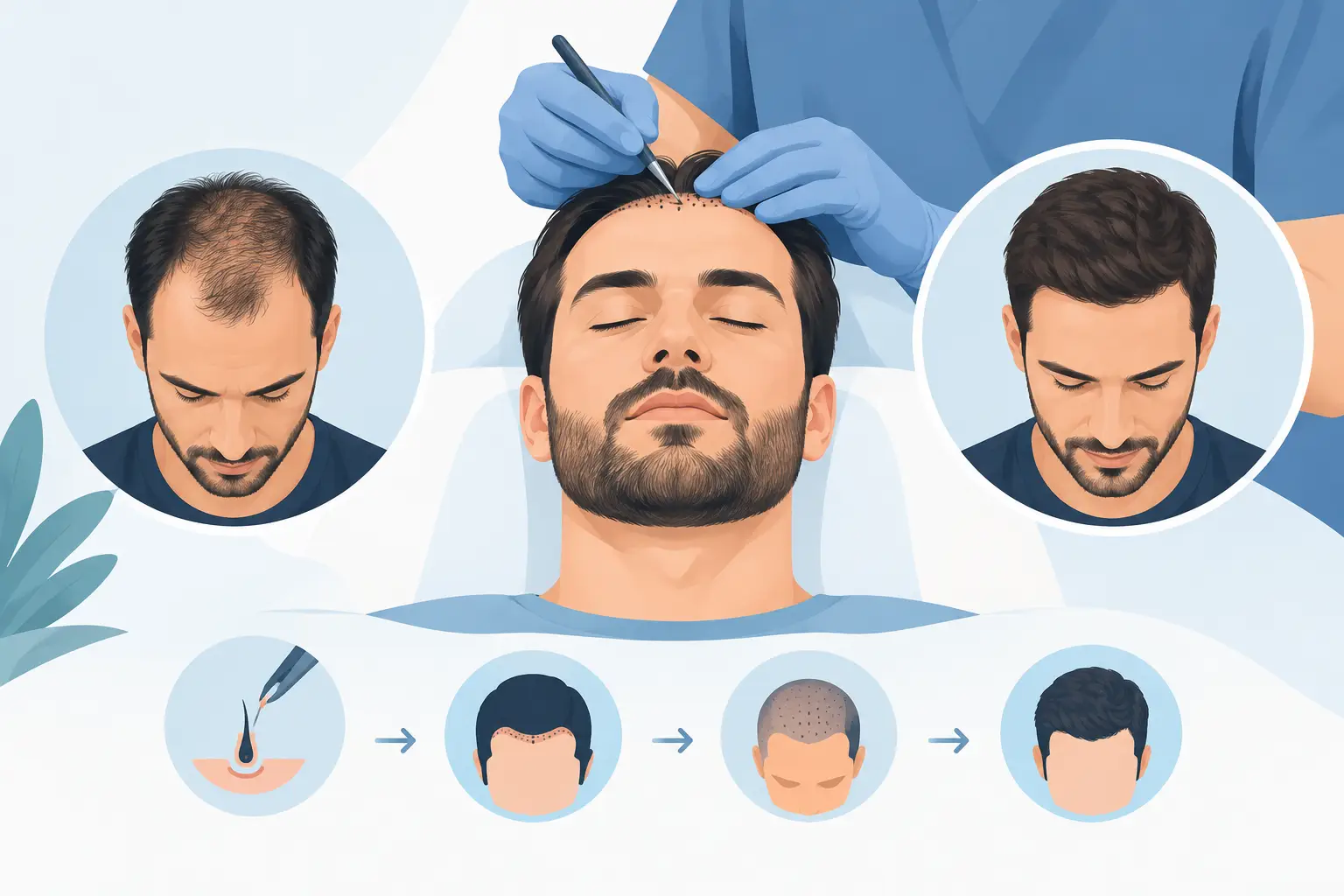
The honest answer is that a hair transplant is not completely sensation-free, but it should not be painful once the local anesthetic has taken effect. Whether you are having FUE, Sapphire FUE, DHI, or an unshaven procedure, the treatment area is numbed before graft extraction and implantation begin.
The part most patients notice is the anesthetic injection. It can feel like a short series of pinches or a burning sensation in the donor area at the back or sides of the scalp, followed by the recipient area where the new hairline or density will be created. This stage is brief. Once numbness develops, patients generally feel pressure, light movement, or occasional vibration rather than sharp pain.
A physician-led clinic will monitor your comfort throughout the day. If you feel a sensation returning, the team can provide additional local anesthetic before proceeding. You remain awake during a standard hair transplant, which allows you to communicate directly with the medical team and take breaks when needed.
Why technique and planning affect comfort
Pain is not only about the procedure itself. It is also influenced by how carefully the donor area is handled, how many grafts are needed, the condition of your scalp, and the experience of the surgical team. A large session may take longer than a smaller hairline refinement, so patients can experience more fatigue simply from remaining in one position for several hours.
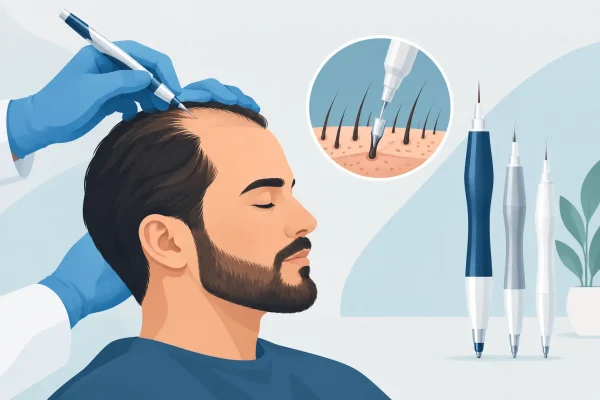
Modern FUE-based techniques are designed to be minimally invasive. Individual follicular units are extracted rather than removing a strip of scalp, which usually means less tension and a more comfortable recovery than older strip-harvesting methods. Sapphire blades can support precise recipient-site creation, while DHI implantation can offer controlled placement in suitable candidates. The right option depends on your existing hair, goals, donor capacity, and the design required for a natural result – not on marketing claims alone.
What Does the Numbing Injection Feel Like?
For many patients, this is the most uncomfortable portion of the day, and it is worth being direct about it. The first few injections may sting for seconds. Some patients compare the feeling to dental numbing injections, while others describe a quick pressure sensation that fades as the anesthetic spreads.
Your anxiety level can make this stage feel more intense. If you arrive exhausted, dehydrated, or overly focused on every sensation, the experience may feel less comfortable than it objectively is. A professional team should explain what is happening before it happens, check in regularly, and create an environment where asking for a pause is completely acceptable.
Some patients also ask about sedation. Local anesthesia is the foundation of hair transplant comfort. Depending on your medical history and the clinic’s protocols, additional measures may be discussed, but safety always comes first. Share all medications, allergies, medical conditions, and prior reactions to anesthesia during your consultation.
Is a Hair Transplant Painful After Surgery?
Post-procedure discomfort is usually mild to moderate and temporary. Once the local anesthetic wears off, the donor area can feel sore or tight, similar to a scalp bruise or tenderness after wearing a tight cap. The implanted area may feel sensitive, especially when you are sleeping or washing your hair during the first week.
Most patients do not describe recovery as severe pain. More commonly, they notice itching, tightness, swelling, or an urge to touch the grafts. That last point matters: itching can be frustrating, but scratching can disturb newly implanted follicles. Follow your aftercare instructions closely rather than trying to manage the sensation on your own.
Your physician may recommend appropriate pain relief and provide a personalized medication plan. Do not take aspirin, anti-inflammatory medication, or supplements without confirming that they are suitable for your recovery, as some products can affect bleeding or healing.
The first week: what usually feels different
The first 24 to 72 hours are often when tenderness and swelling are most noticeable. Swelling may move from the forehead toward the eye area in some patients, especially after frontal hairline work. This is generally temporary, but your clinical team should explain how to reduce it and when to contact them.
By days five to seven, discomfort usually gives way to scabbing and itchiness. Small crusts form around the implanted follicles as part of normal healing. You will receive instructions on gentle washing and moisturizing techniques to help them soften and release at the appropriate time. Avoid picking, rubbing, heavy sweating, and direct sun exposure while the scalp is healing.
The donor area may remain tender a little longer, particularly if a high number of grafts were extracted. Patients with a lower pain threshold, sensitive skin, or a larger treatment area may need more time before the scalp feels fully normal. That does not necessarily indicate a problem, but persistent or worsening pain should always be discussed with your clinic.
How to Make Hair Transplant Recovery More Comfortable
Good aftercare can make a meaningful difference in how you feel and how well your grafts settle. Sleep with your head elevated as instructed, especially in the early days. This can help limit swelling and protects the recipient area from accidental pressure against a pillow.
Hydration, light meals, and rest are also practical parts of recovery. Avoid alcohol and smoking according to your physician’s guidance, as both can interfere with healing. Strenuous workouts, swimming, saunas, and activities that cause heavy sweating should be postponed for the recommended period.
For international patients, recovery planning begins before travel. Build in time in Istanbul to attend your follow-up appointment and receive your first professional wash if it is included in your care plan. Do not schedule a demanding work event, long social weekend, or beach vacation immediately after surgery. A discreet recovery is possible, especially with an unshaven approach for eligible patients, but your scalp still needs protection and patience.
When Pain Could Signal That You Need Medical Advice
A little soreness, tightness, itching, and temporary swelling are expected. Severe pain is not something you should simply tolerate. Contact your medical team promptly if discomfort increases rather than improves, or if it comes with spreading redness, warmth, unusual discharge, fever, or significant bleeding.
This is one reason physician oversight matters. Hair restoration is an aesthetic procedure, but it is still medical care. Proper donor assessment, sterile technique, measured extraction, and accessible aftercare protect both your comfort and the quality of your long-term result.
The Bigger Concern Is Often Anxiety, Not Pain
Many people asking whether a transplant hurts are really asking a broader question: Will I feel safe, look natural, and be able to return to my life without a difficult recovery? Those are reasonable concerns, particularly when you are traveling internationally for treatment.
A high-quality consultation should give you specific answers. You should understand your estimated graft range, proposed hairline design, technique options, expected recovery timeline, and realistic density outcome. Advanced scalp analysis can also help build a plan around your current hair characteristics rather than applying the same approach to every patient.
At HairNeva, the focus is on surgeon-led planning and precision-based restoration, because a natural-looking result begins with the right medical and aesthetic decisions long before the first graft is implanted. Comfort is part of that experience, but so is protecting your donor area and designing results that continue to look balanced over time.
If fear of pain has kept you from exploring hair restoration, let a detailed consultation replace assumptions with a personalized plan. The first few moments of numbing are temporary. The confidence that comes from seeing a refined, natural-looking hairline can last much longer.